BofA Fund Manager Survey
The latest BofA Global Fund Manager Survey reveals an interesting tension: institutional investors remain constructive on growth and corporate earnings, while concerns around interest rates, positioning and elevated investment spending continue to build.
A recession barely features in the base case anymore. Instead, a different question is moving into focus: How long can elevated valuations and aggressive growth expectations withstand a structurally higher interest-rate environment?
“No Landing” Becomes the Base Case
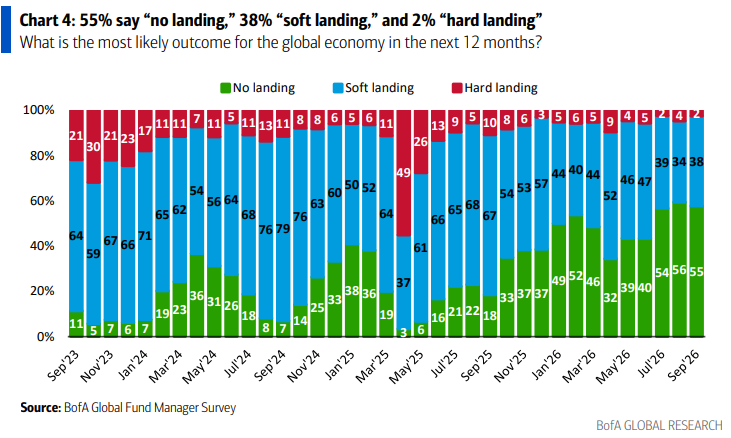
55% of fund managers now expect a “no landing,” while another 38% expect a soft landing. Only 2% see a hard landing.
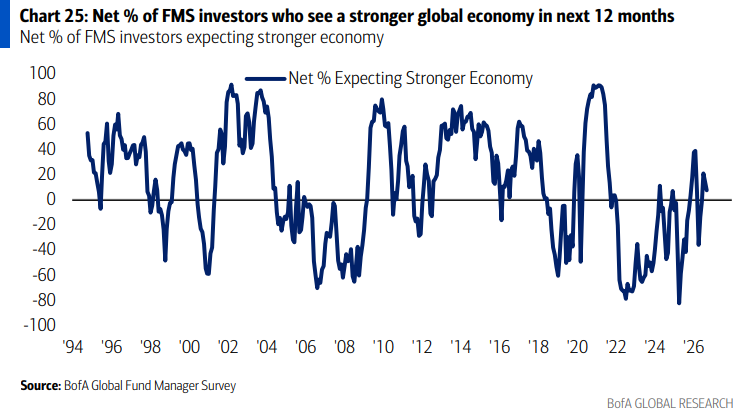
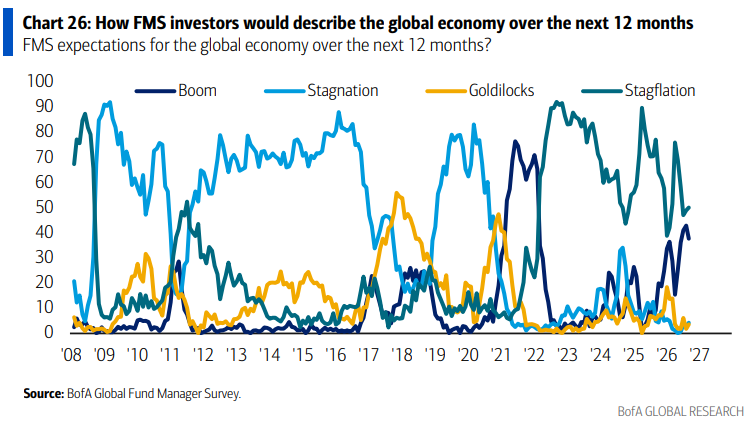
Macro positioning therefore remains clearly constructive. At the same time, the global growth outlook has lost some momentum recently. Investors still expect growth — just not with the same strength as before.
Higher for Longer Is Back
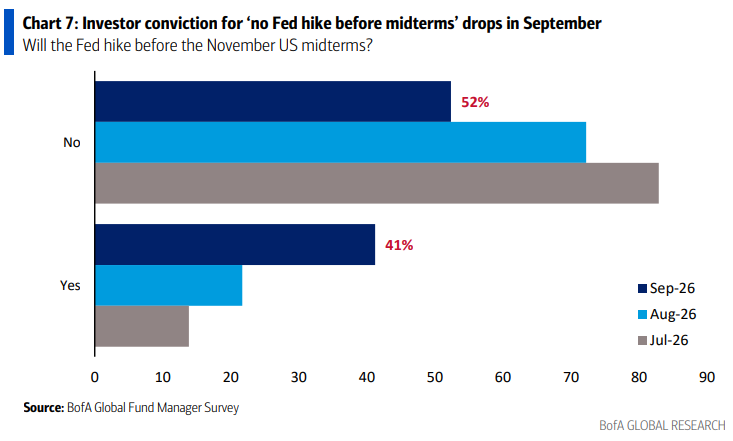
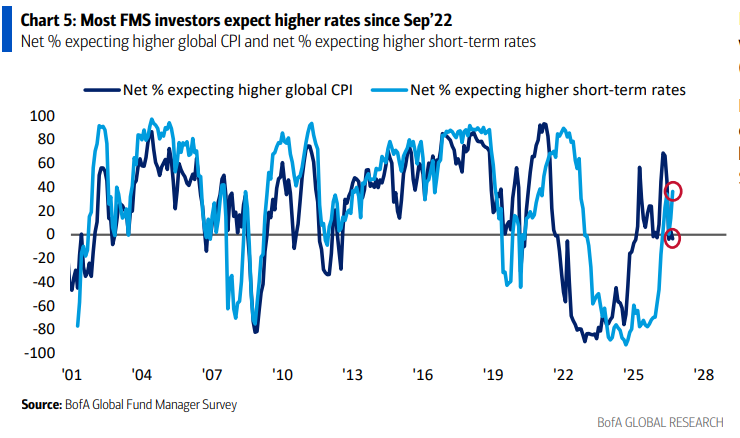
In line with resilient growth, rate expectations have also moved higher. Expectations for higher short-term rates are now at their highest level since 2022, while a growing share of investors view the Fed as being “behind the curve.”
What matters here is not only the Fed Funds Rate itself, but increasingly the direction of real yields and long-term Treasury yields.
Bond Yields Become the Biggest Tail Risk
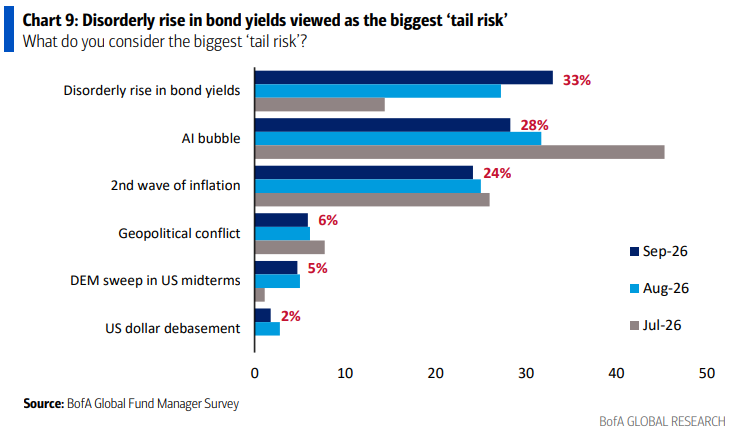
33% of fund managers now see a disorderly rise in bond yields as the biggest market risk — ahead of geopolitics, inflation or a potential AI bubble.
This matters significantly for equities. Higher long-term yields increase discount rates, raise financing costs and make Treasuries more attractive relative to stocks.
And it is not just the absolute level that matters: real yields, term premium and the speed of the move in yields will likely determine how much pressure equity valuations ultimately face.
The Yield Curve Moves Back Into Focus
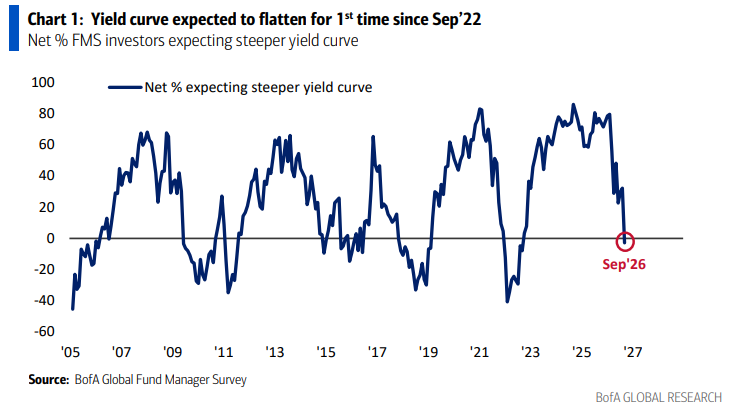
For the first time since September 2022, a majority of fund managers expect a flatter US yield curve.
The key question is what drives that move. Rising front-end yields due to higher policy-rate expectations send a very different signal than rising long-end yields driven by higher inflation expectations, fiscal concerns or an increasing term premium.
Risk Appetite Starts to Cool
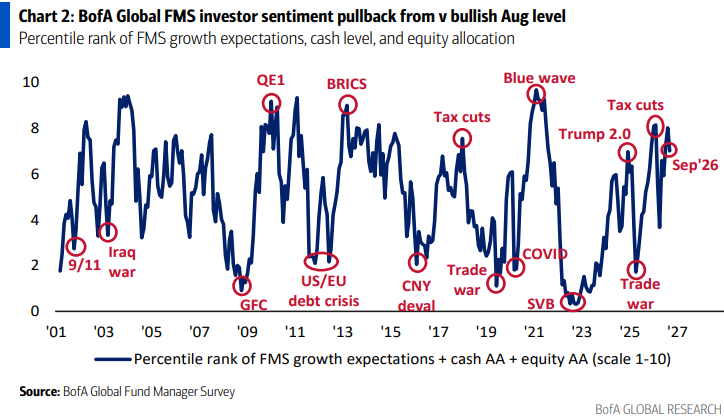
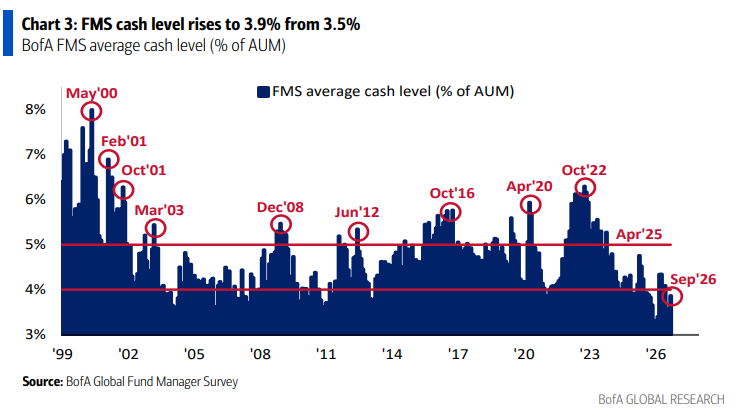
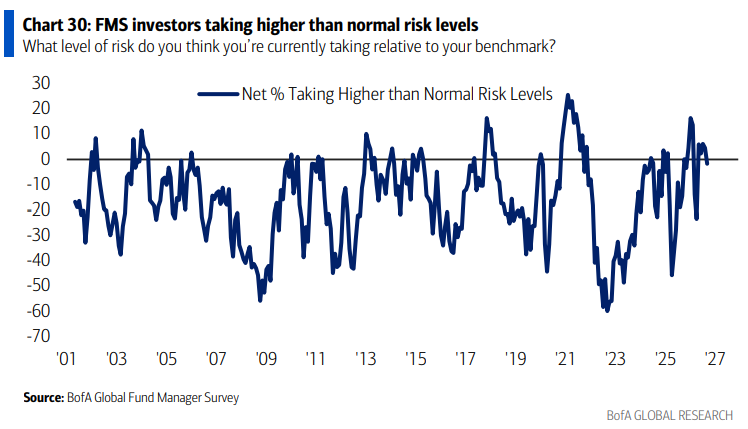
Despite the constructive macro backdrop, investors are becoming slightly more cautious. Risk appetite has fallen for the first time since April, while average cash levels increased from 3.5% to 3.9%.
This is not a classic risk-off signal yet. Positioning remains relatively aggressive, but investors are beginning to take some risk off the table.
Equities Remain Clearly Preferred Over Bonds
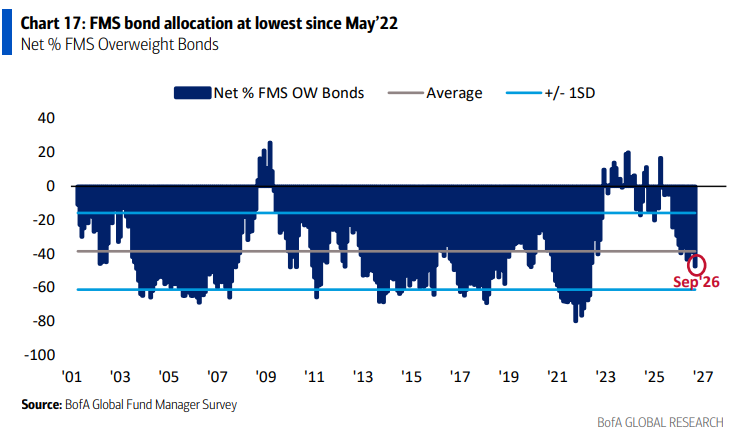
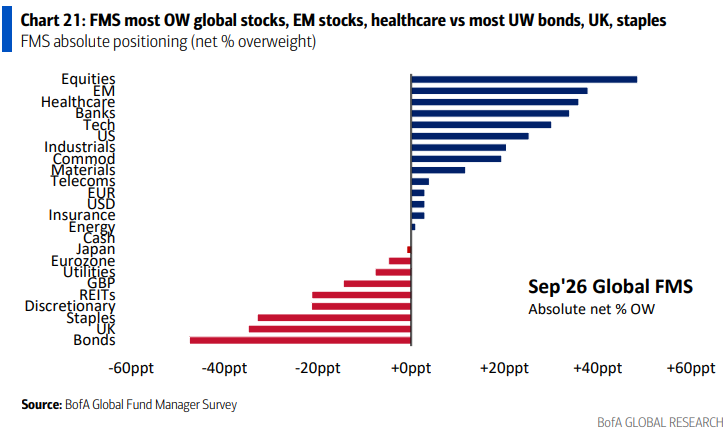
Asset allocation remains decisive: equities continue to be strongly preferred over bonds, while bond allocations have fallen to their lowest level since May 2022.
The contradiction is interesting: investors see rising bond yields as the biggest tail risk, while already maintaining a significant underweight in bonds.
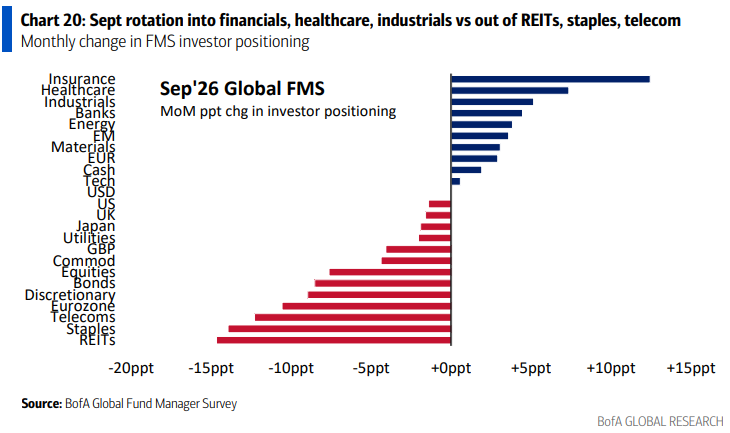
A Clear Sector Rotation Is Taking Place Beneath the Surface
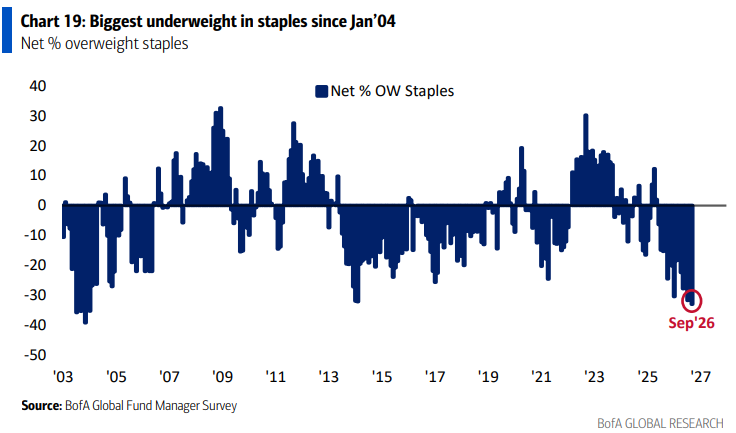
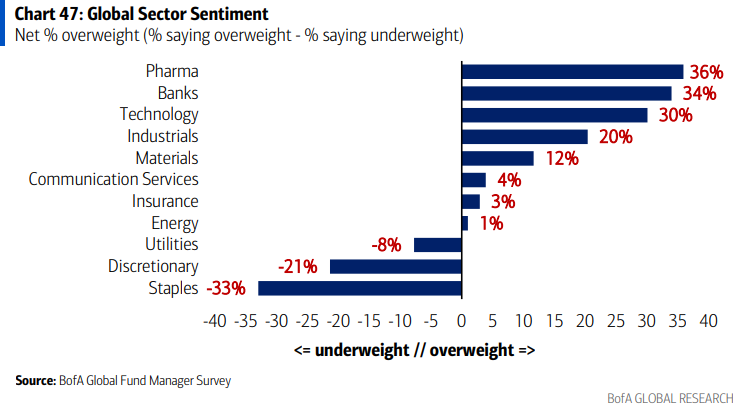
At the sector level, positioning is shifting toward Healthcare, Financials and Industrials. At the same time, Consumer Staples have reached their largest underweight since 2004.
This fits with a market that continues to expect resilient economic growth while avoiding traditional defensive positioning.
Extreme positioning is particularly interesting because it highlights where a significant amount of consensus may already be priced in — leaving less room for positive surprises and potentially more sensitivity to a change in the macro narrative.
Semiconductors Remain the Most Crowded Trade
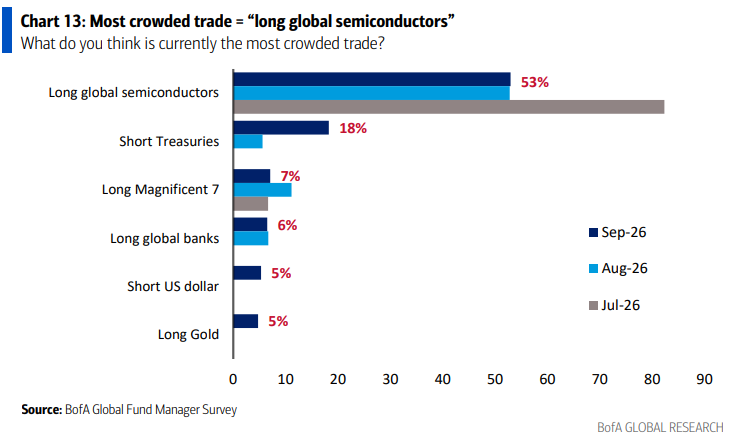
53% of fund managers identify “Long Global Semiconductors” as the most crowded trade globally.
Crowding does not automatically mean the fundamental thesis is wrong. But it changes the risk profile: the more heavily positioned a trade becomes, the stronger the potential reaction if expectations disappoint and investors attempt to reduce exposure at the same time.
Is the AI Capex Boom Turning Into Overinvestment?
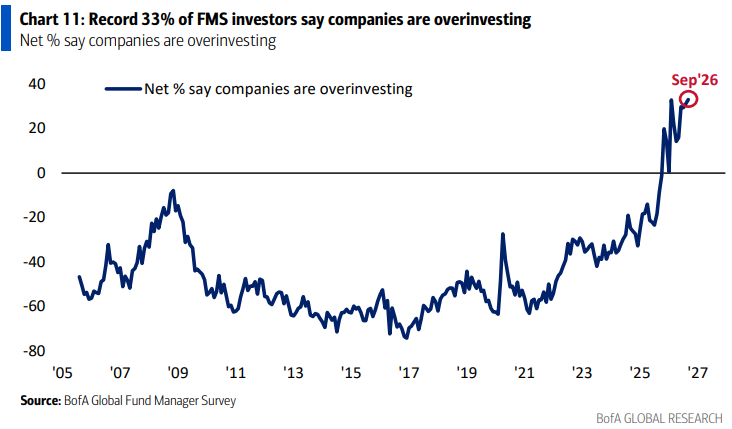
A record 33% of fund managers now believe companies are overinvesting.
This also marks an important shift in the AI debate. The key question is no longer simply how much hyperscalers are spending on data centers, chips and infrastructure, but what return on invested capital those expenditures will ultimately generate.
For the next phase of the AI cycle, metrics such as FCF conversion, incremental ROIC and Capex-to-Revenue could therefore become increasingly important.
Quality Remains in Demand
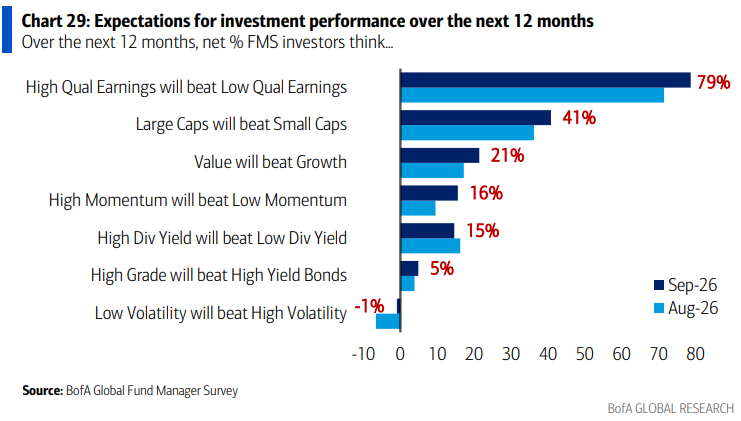
Quality remains one of the preferred factors for the next 12 months.
That fits with an environment of higher financing costs: strong balance sheets, high margins and stable cash flows become relatively more valuable. However, valuation remains critical — even high-quality companies with long-duration cash flows can remain sensitive to rising real yields.
Conclusion
The latest Fund Manager Survey is not bearish. The institutional base case remains constructive: growth holds up, corporate earnings continue to expand and equities remain preferred over bonds.
At the same time, the risk structure is changing.
Cash is rising, risk exposure is being reduced, AI positioning remains crowded and bond yields have become the biggest tail risk.
The next major market conflict may therefore be less about growth versus recession and increasingly about earnings versus yields.
As long as rising yields are accompanied by stronger growth and improving earnings expectations, equities can absorb a higher-rate environment. The setup becomes more challenging if real yields and term premium continue to rise while EPS revisions stagnate or turn lower.
The bond market could increasingly determine how much valuation the equity market can sustain.
Source: BofA Global Fund Manager Survey, September 2026