The Fed Hikes – But Markets Are Going Even Further
As of September 17, 2026
The Federal Reserve raised its target range by 25 basis points to 3.75–4.00% on September 16. But the individual rate hike is not the most important part of the story. The broader backdrop matters more: economic activity remains solid, the labor market has yet to show significant stress, and inflation remains elevated.
That combination is forcing markets to reassess the entire path of US interest rates.
The Fed Is Revising Its Own Rate Path Higher
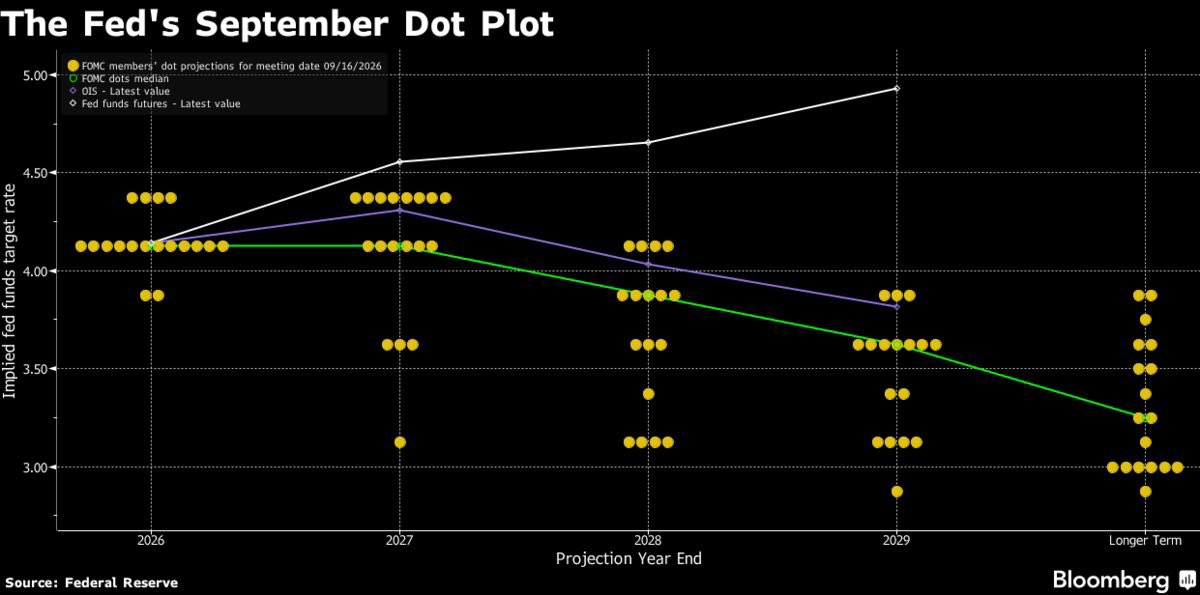
Back in June, the median FOMC projection for the federal funds rate at the end of 2026 stood at 3.8%. Three months later, it has moved to 4.1%.
The shift becomes even more significant further out. The 2027 median increased from 3.6% to 4.1%, while the 2028 projection moved from 3.4% to 3.9%. The longer-run estimate also edged higher to 3.2%.
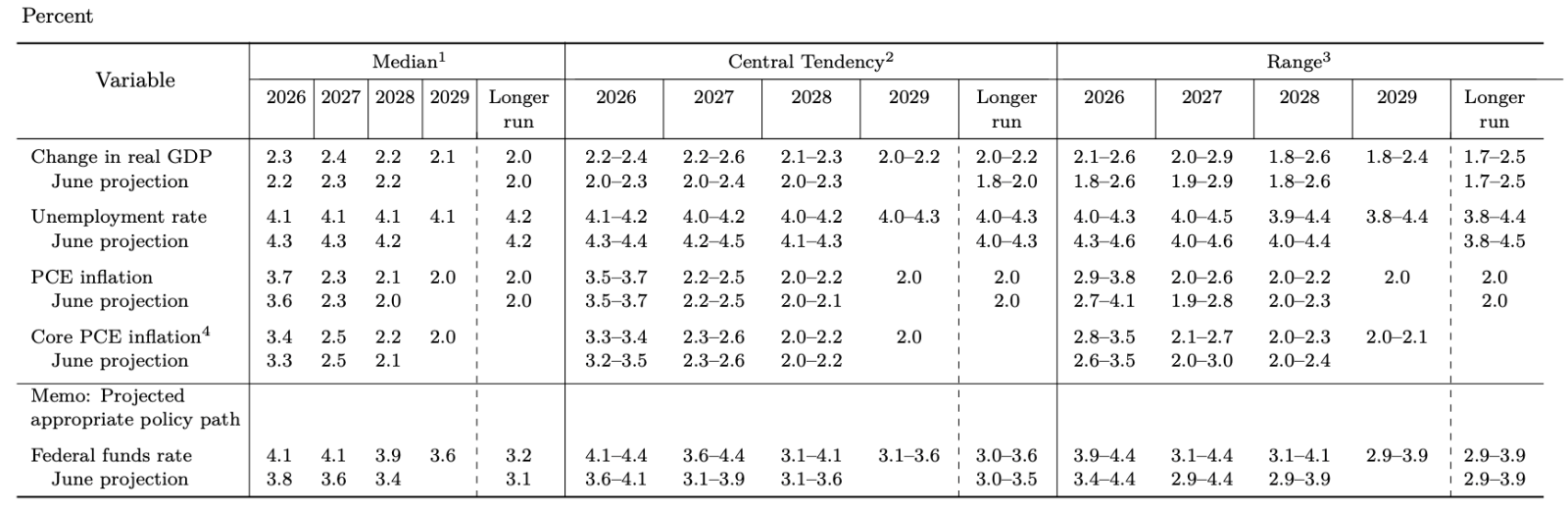
This is not a marginal adjustment. Within one quarter, the FOMC has materially shifted its assessment toward a higher-for-longer rate environment.
The economic projections help explain why. The Fed now expects 2.3% real GDP growth in 2026, while the projected unemployment rate has been lowered from 4.3% to 4.1%. At the same time, the inflation outlook has moved slightly higher, with PCE inflation projected at 3.7% and Core PCE at 3.4%.
In other words: slightly stronger growth, lower unemployment and higher inflation than the Fed expected in June.
The Macro Data Gives the Fed Little Reason to Back Off
The labor market has cooled from previous years, but it is not breaking. Unemployment remains around 4.1%, initial jobless claims remain close to the 200,000 level, and payroll growth continues. Labor demand has moderated, but more than seven million job openings still point to a functioning labor market.
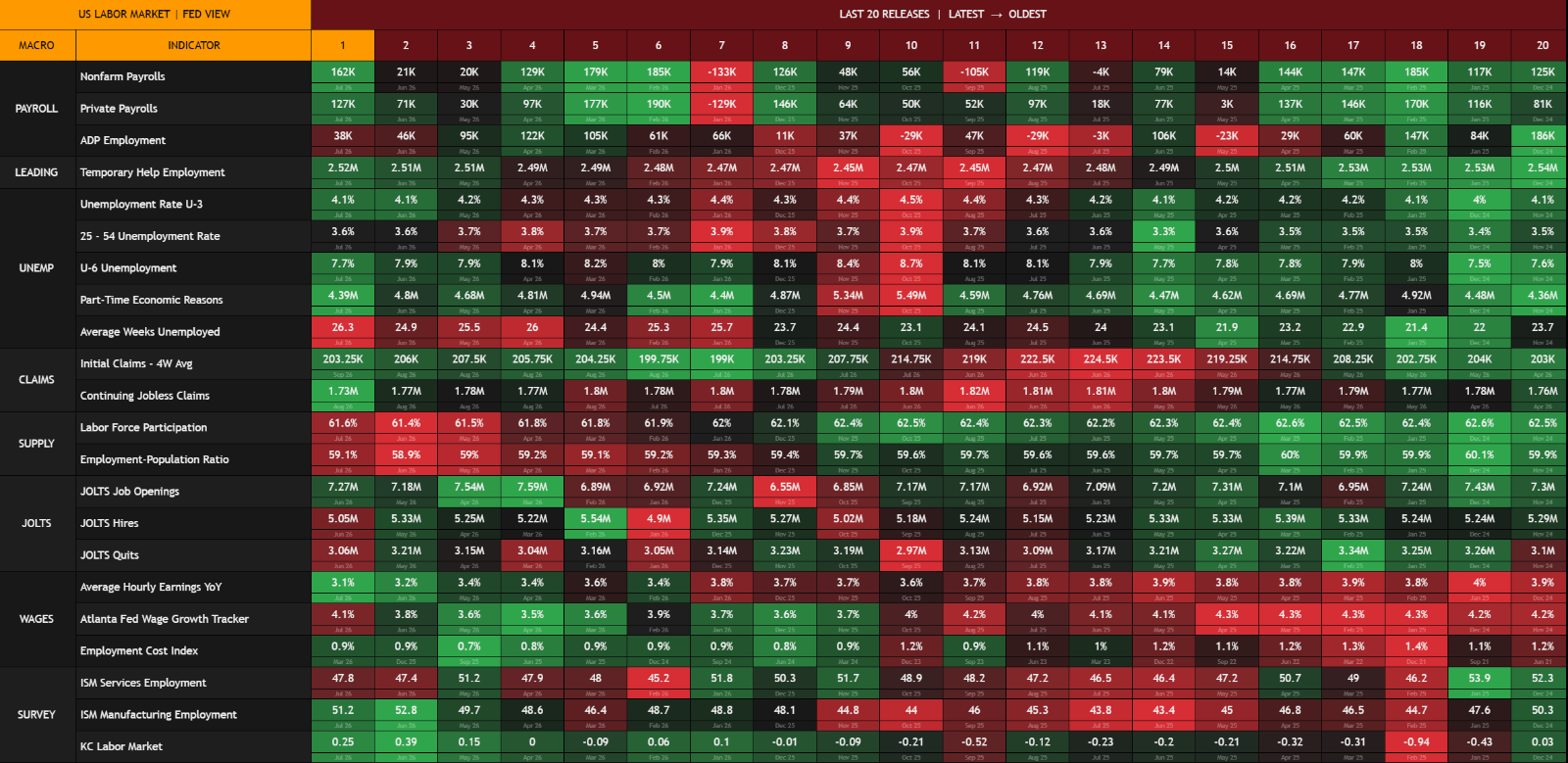
Inflation is arguably the more important part of the equation. Headline and Core PCE remain elevated, while parts of the producer-price complex and several prices-paid indicators continue to signal underlying pressure.
Higher input, import and producer prices do not automatically translate one-for-one into consumer inflation, but they increase the risk that the disinflation process remains slower than previously expected.
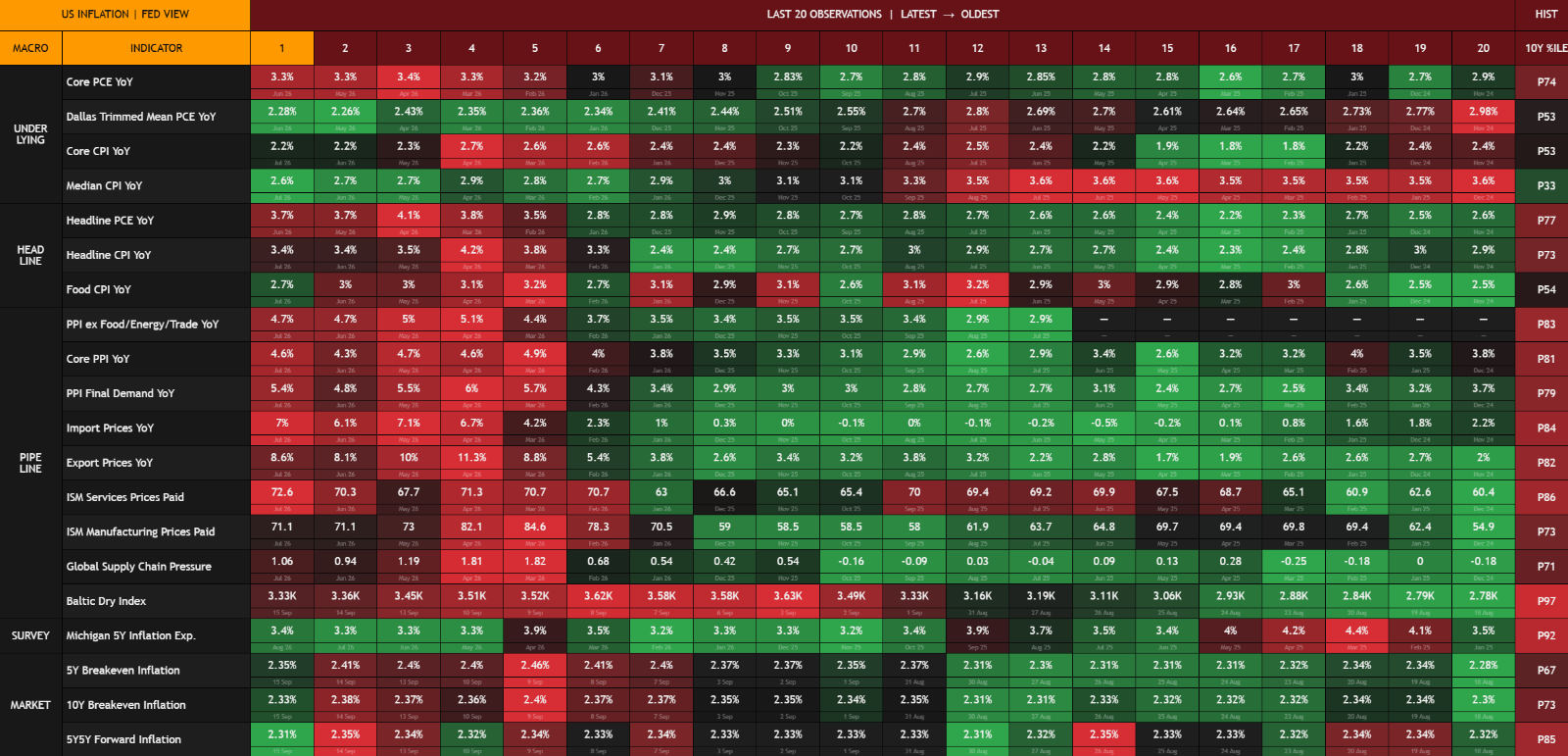
At the same time, there is still no clear recessionary counterweight. Manufacturing activity has moved back into expansion territory, services remain strong and several high-frequency indicators continue to point toward positive economic activity.
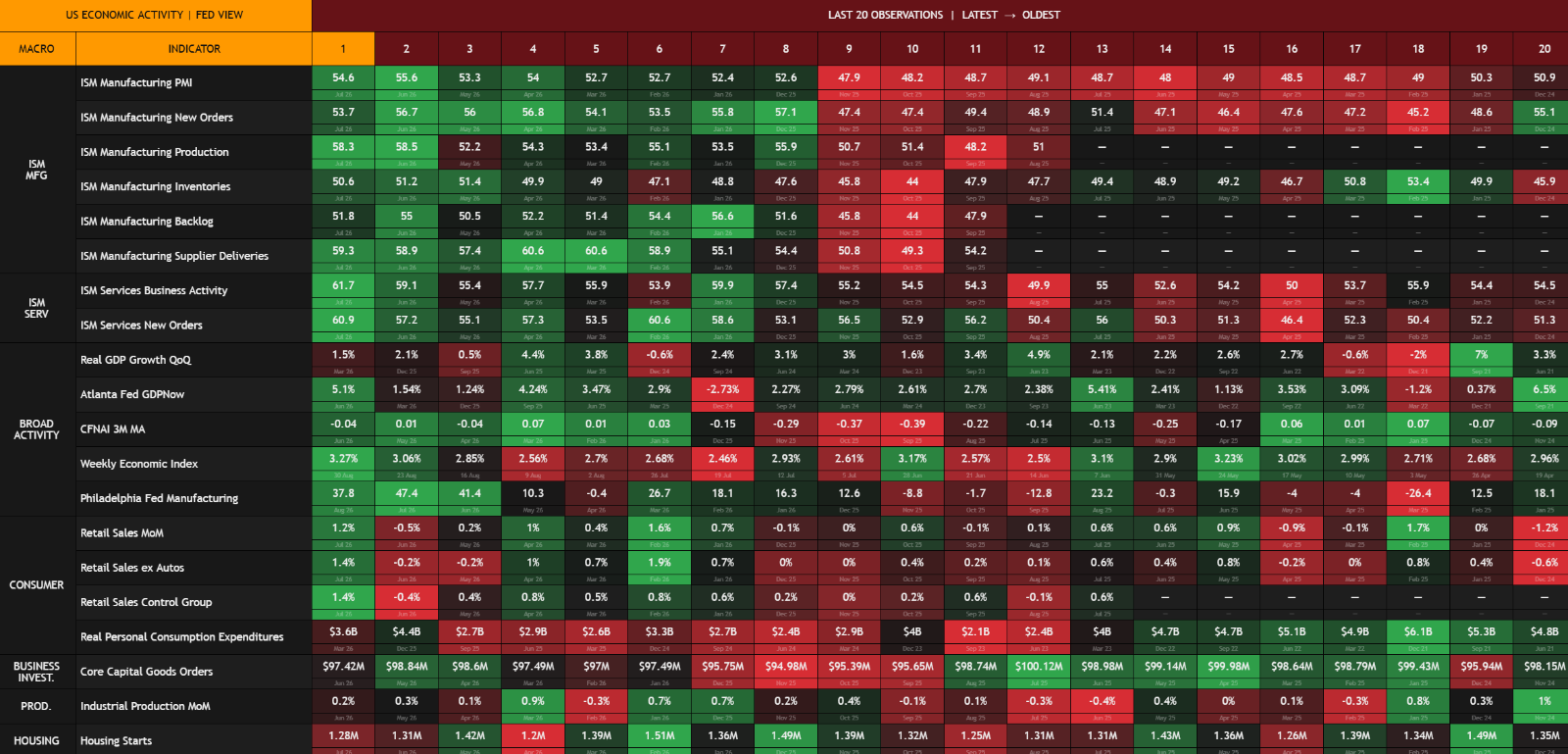
This leaves monetary policy facing an uncomfortable combination: the economy is not currently weak enough to push back strongly against higher rates, while inflation remains too elevated to justify rapid easing.
Markets Are Already Going Beyond the Dot Plot
This is where the rates market becomes particularly interesting.
The market-implied rate curve has shifted materially higher within just one month. The repricing is relatively modest at the very front end but becomes significantly larger further along the curve, reaching roughly 50–60 basis points across later maturities.
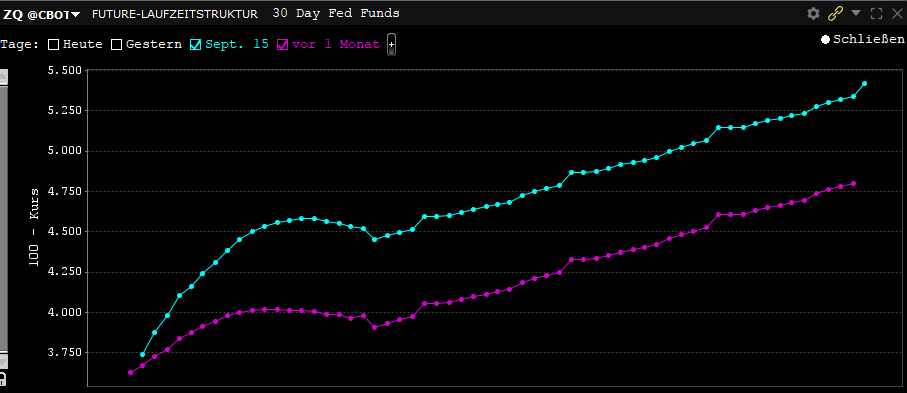
The market is therefore no longer simply repricing the next Fed meeting. It is increasingly questioning how far interest rates can actually fall over the coming years.
The December 2028 Fed Funds future makes this particularly visible.
The implied rate has recently moved toward approximately 4.72%. By comparison, the FOMC's new median projection for the end of 2028 stands at just 3.9%.
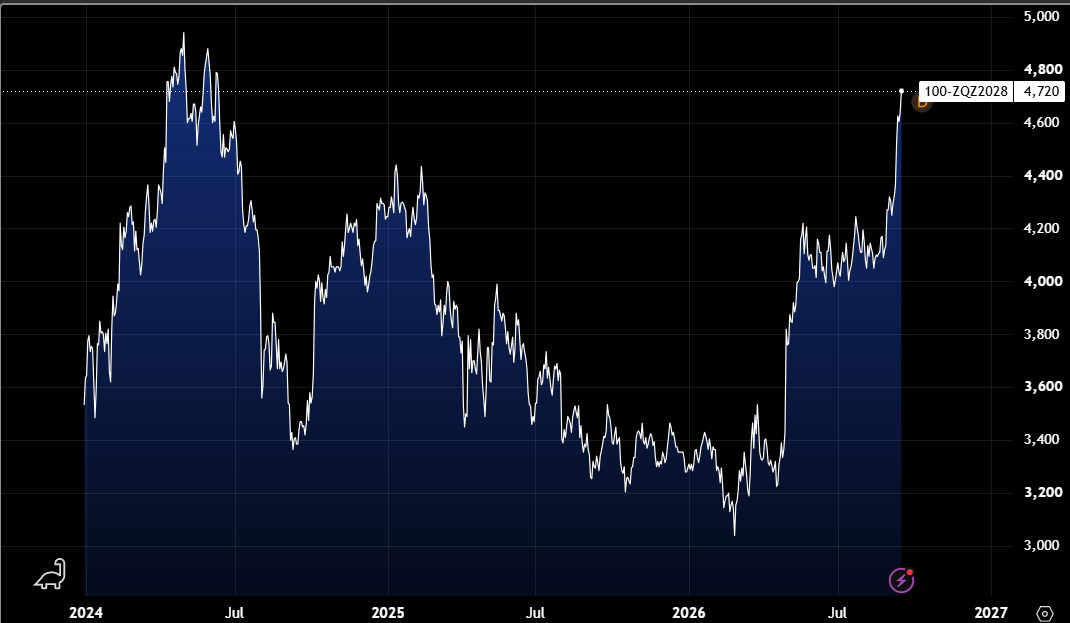
That leaves market pricing roughly 80 basis points above the new Fed median.
The two measures are not perfectly comparable. Fed Funds futures reflect the average effective federal funds rate during the respective contract month, while the dot plot represents policymakers' assessments of the appropriate year-end policy rate.
Still, the direction and magnitude of the divergence are notable.
Even after the Federal Reserve materially revised its own projections higher, the market is already pricing an even more restrictive path.
COT: Leveraged Funds Are Heavily Positioned in Rates
Positioning tells another part of the story.
In 3-Month SOFR futures, leveraged funds currently hold a net position of roughly -2.80 million contracts.
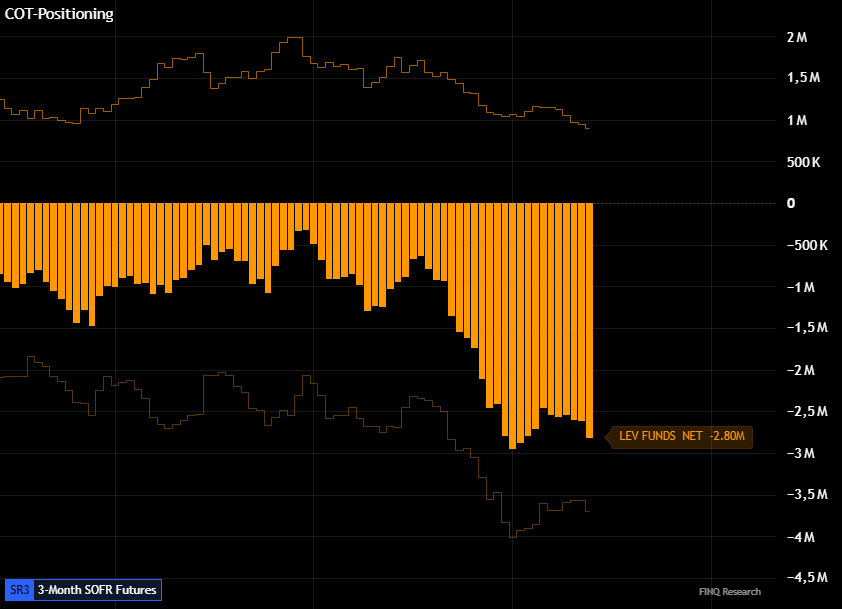
That is particularly relevant because SOFR futures are closely linked to expectations for short-term US interest rates. The positioning illustrates how aggressively leveraged participants are currently exposed across the rates complex.
The picture is similarly extreme in Ultra US Treasury Bond futures, where leveraged funds hold a net position of roughly -864,000 contracts.
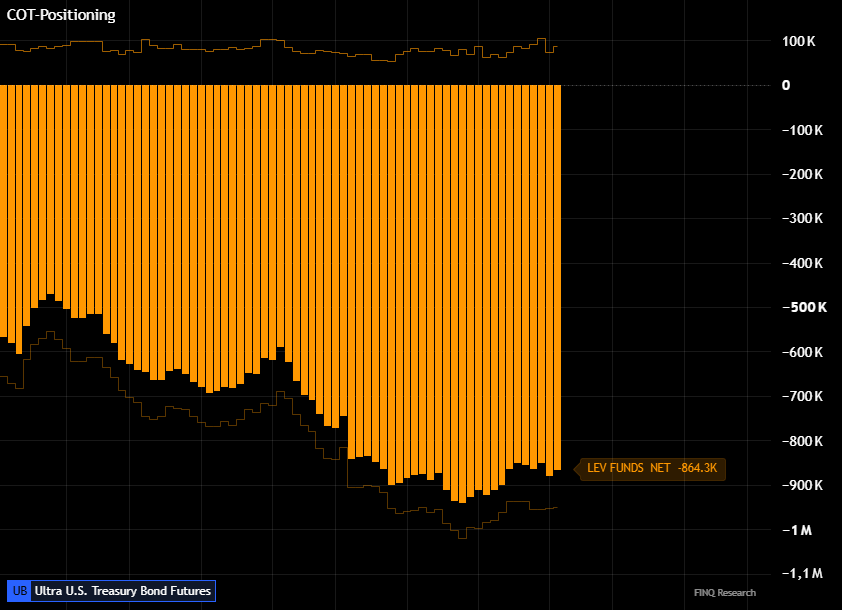
However, Treasury COT data requires more careful interpretation.
A large leveraged-fund short position does not necessarily mean hedge funds are making a purely directional bet on falling Treasury prices and rising yields. Treasury futures shorts are frequently used as part of cash-futures basis trades and other relative-value strategies, where a short futures position is paired with a long position in cash Treasuries.
The positioning should therefore not be interpreted as a simple directional signal.
Still, the broader picture is notable: macro data, the rates curve, futures pricing and positioning are all reflecting the same higher-rate environment.
What Matters From Here
Markets have repriced a substantial part of the future US rate path within only a few weeks. At the same time, the Federal Reserve has materially shifted its own projections higher.
The key question is therefore changing.
It is becoming less about when the Fed will start cutting again and increasingly about how high interest rates need to remain in an economy that continues to grow while inflation remains above target.
As long as economic growth and the labor market remain resilient and inflation fails to move convincingly back toward 2%, it may be difficult for the market to fully unwind the higher-rate regime currently being priced.
But expectations have also moved considerably. Any meaningful deterioration in labor-market data, renewed disinflation or sharp slowdown in economic activity could therefore trigger an equally significant repricing in the opposite direction.
Our Base Case for December
A further rate hike in December therefore remains our current base case. As long as inflationary pressure does not cool materially, the labor market shows no clearer signs of weakness and economic activity remains resilient, we see little fundamental reason in the current data for the Fed to reverse course quickly.
The main risks to this scenario come from potential changes in the broader economic policy environment as well as increasing fiscal risks and the associated pressure across the Treasury market. Ultimately, however, the data between now and December will determine the path forward. If inflation in particular fails to cool, we believe the risk of another rate hike remains elevated.
Disclaimer
This publication is provided for informational and research purposes only and does not constitute investment advice, a recommendation, or an offer or solicitation to buy or sell any security or financial instrument. Past performance, market positioning and market-implied expectations are not indicative of future results.