When Does the Defensive Sector Become Interesting Again?
Utilities currently find themselves in an unusually interesting position. On one side, the macroeconomic environment could hardly be more challenging for the sector: long-term U.S. yields are moving back toward 5%, energy prices are putting renewed upward pressure on inflation, and even further rate hikes by the Federal Reserve are back on the table. On the other side, precisely this pressure has started to materially reshape valuations, positioning, and the sector's internal market structure.
This creates a setup that we believe deserves closer attention. Not because the headwinds facing utilities have already disappeared, but because prices are increasingly beginning to reflect them. If conditions in the broader equity market deteriorate at the same time, utilities could once again move into focus as part of a defensive sector rotation.
Don't want to miss more data-driven market insights like this? Check out our Weekly Market Recap:
https://finq-research.kit.com/cc5c1deec7
The Fight for Capital Is Getting Tougher
Any analysis of utilities today has to start with the bond market.
Utility stocks have traditionally occupied a unique position within equity portfolios. Relatively stable and predictable cash flows, regulated business models, and attractive dividends have made the sector something of a hybrid between traditional equity exposure and income generation. This advantage was particularly pronounced during the low-rate era: when government bonds offered little to no yield, a dividend yield of three or four percent was highly attractive.
Today, that equation looks completely different.
The yield on the 10-year U.S. Treasury reached 4.85% on September 9 and is now approaching the psychologically important 5% threshold. At the same time, longer maturities are also facing considerable selling pressure. Attempts by the U.S. Treasury to support liquidity at the long end of the yield curve through larger buybacks have so far failed to sustainably halt the rise in yields.
For utilities, this creates direct competition for capital. Investors no longer have to choose between a utility stock offering an attractive dividend and a government bond yielding close to zero. They can earn almost 5% on a 10-year U.S. Treasury without assuming corporate, earnings, or equity-market risk.
At the same time, rising interest rates hit the sector from a second direction. Utilities are among the most capital-intensive businesses in the equity market. Power grids, generation capacity, renewable energy projects, power plants, and broader infrastructure expansion require substantial investment and therefore regular access to debt markets. Higher yields consequently increase not only the opportunity cost for investors, but also the financing costs of the companies themselves.
This is precisely why the development we discussed in our previous bond-market analysis is so relevant for utilities. Rising long-term yields change the relative attractiveness of almost every asset class — and few equity sectors compete as directly with fixed-income assets as utilities do.
Renewed inflationary pressure is making this problem even more pronounced. Brent crude oil has moved back above $100 per barrel, while U.S. producer prices increased by 5.4% year over year in August. The Fed currently maintains its target range at 3.50–3.75%, but following the latest data, markets are now pricing in roughly a 70% probability of a rate hike at the upcoming September meeting. The narrative of a steady monetary-policy easing cycle has therefore disappeared for the time being.
And it is precisely against this backdrop that valuation becomes interesting.
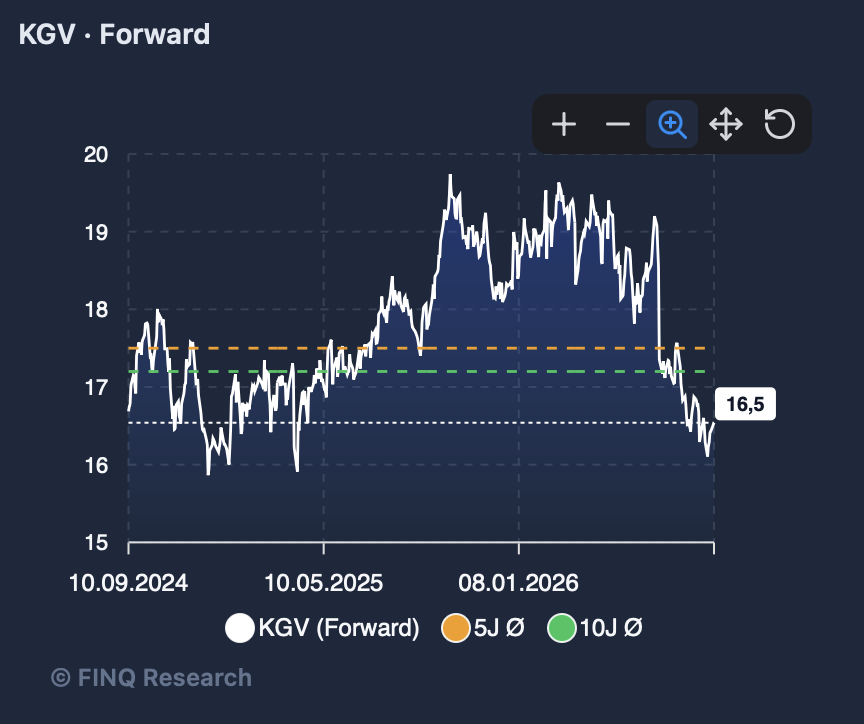
The sector's forward P/E ratio currently stands at approximately 16.5x. By comparison, the five-year average is around 17.5x, while the ten-year average is roughly 17.2x. Utilities are therefore now trading below both historical reference points.
This does not mean the sector is outright cheap. With the 10-year U.S. Treasury yield approaching 5%, the valuation discount arguably needs to be larger than it was in a zero-rate environment. But the more important point is this: the pressure from higher interest rates is increasingly being reflected in prices.
The Correction Is Underway — But We Are Not Seeing Capitulation Yet
The drawdown profile supports this interpretation.
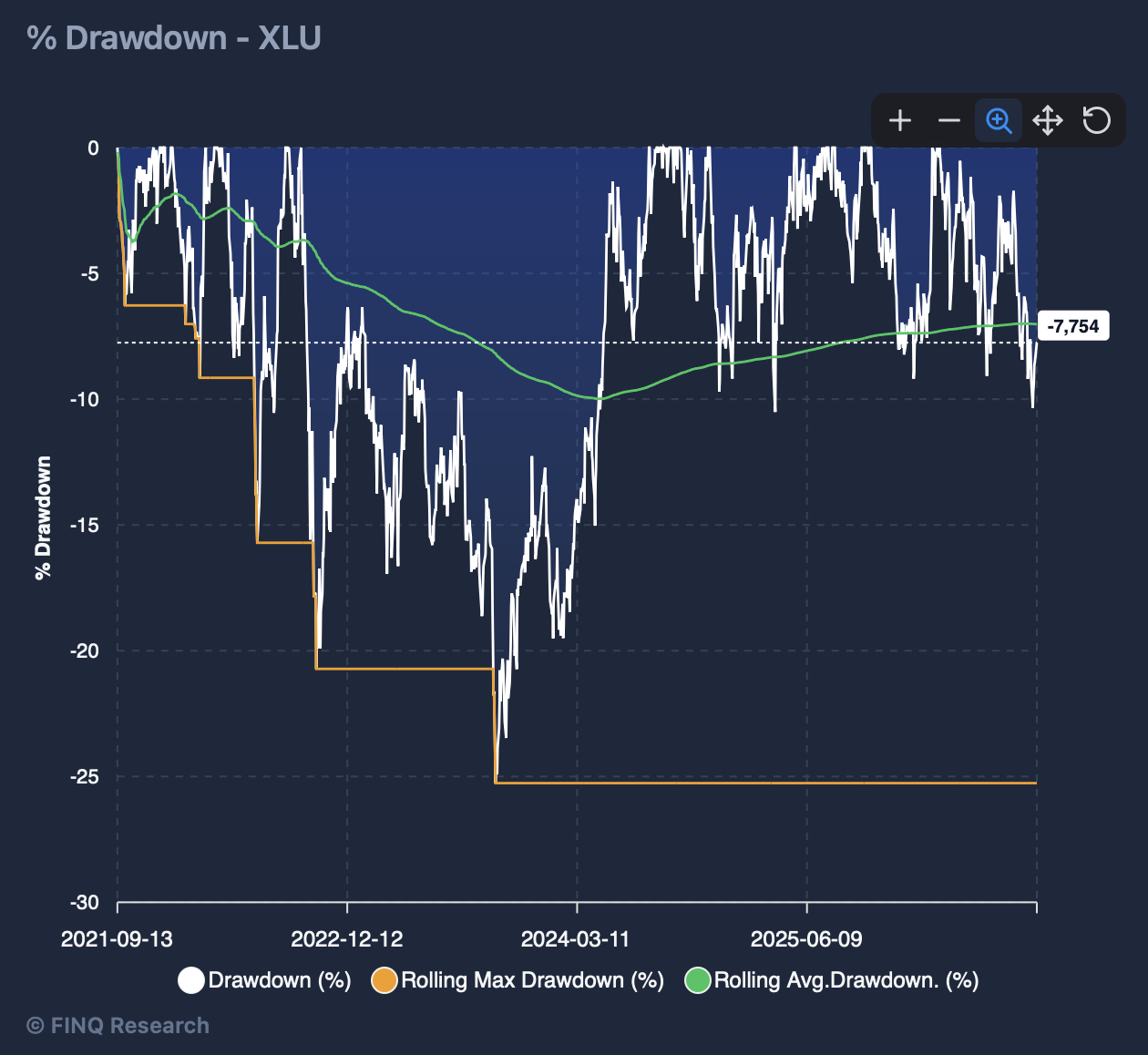
XLU is currently trading approximately 7.8% below its previous high. Historically, this represents a meaningful correction, but by no means an extreme one. During periods of substantially more aggressive sector repricing, drawdowns from previous highs temporarily exceeded 20%.
This leaves us in an interesting intermediate phase. Some of the previous valuation has been removed, but price action is not yet showing signs of classic capitulation. This matters for our investment thesis because the case is therefore less dependent on an extreme contrarian signal and more on whether the sector's relative attractiveness is beginning to change.
And this is where the picture becomes more interesting.
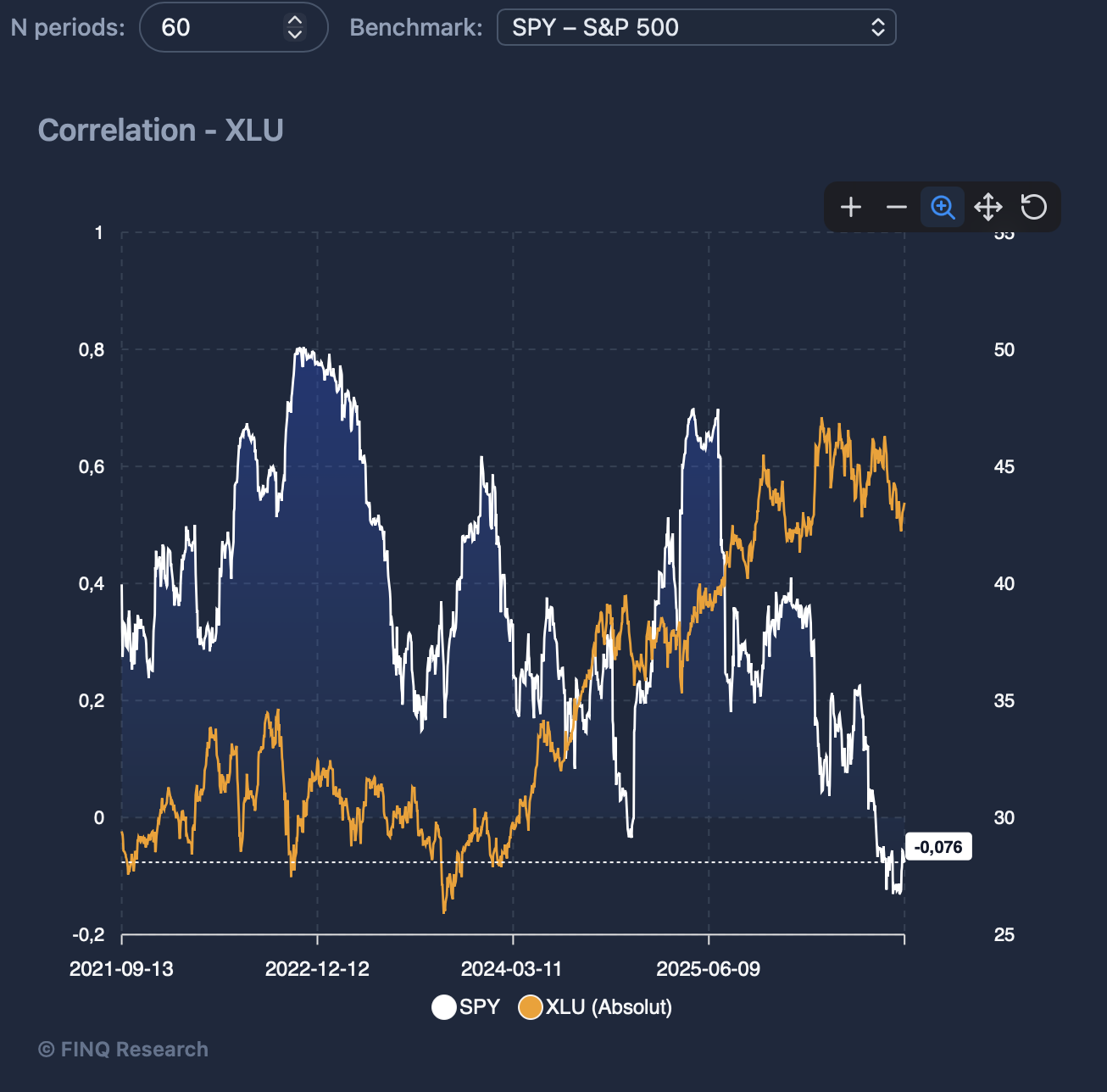
The rolling 60-period correlation between XLU and the S&P 500 has recently fallen to approximately -0.076. Statistically, the sector is therefore currently moving almost independently of the broader equity market.
This is not a buy signal. But it is relevant from a portfolio-allocation perspective. A sector rotation does not necessarily require capital to leave the equity market entirely. During weaker market environments, capital often shifts within equities: away from highly valued or economically sensitive areas and toward business models with more stable cash flows and lower earnings sensitivity to the economic cycle.
Utilities have traditionally been one of the sectors capable of benefiting from this type of defensive rotation. The fact that their correlation with the S&P 500 has already moved toward zero at least indicates that the sector is increasingly being driven by a different set of factors than the broader market.
Stress Beneath the Surface Is Increasing
The picture becomes even more interesting when we look at positioning and market breadth.
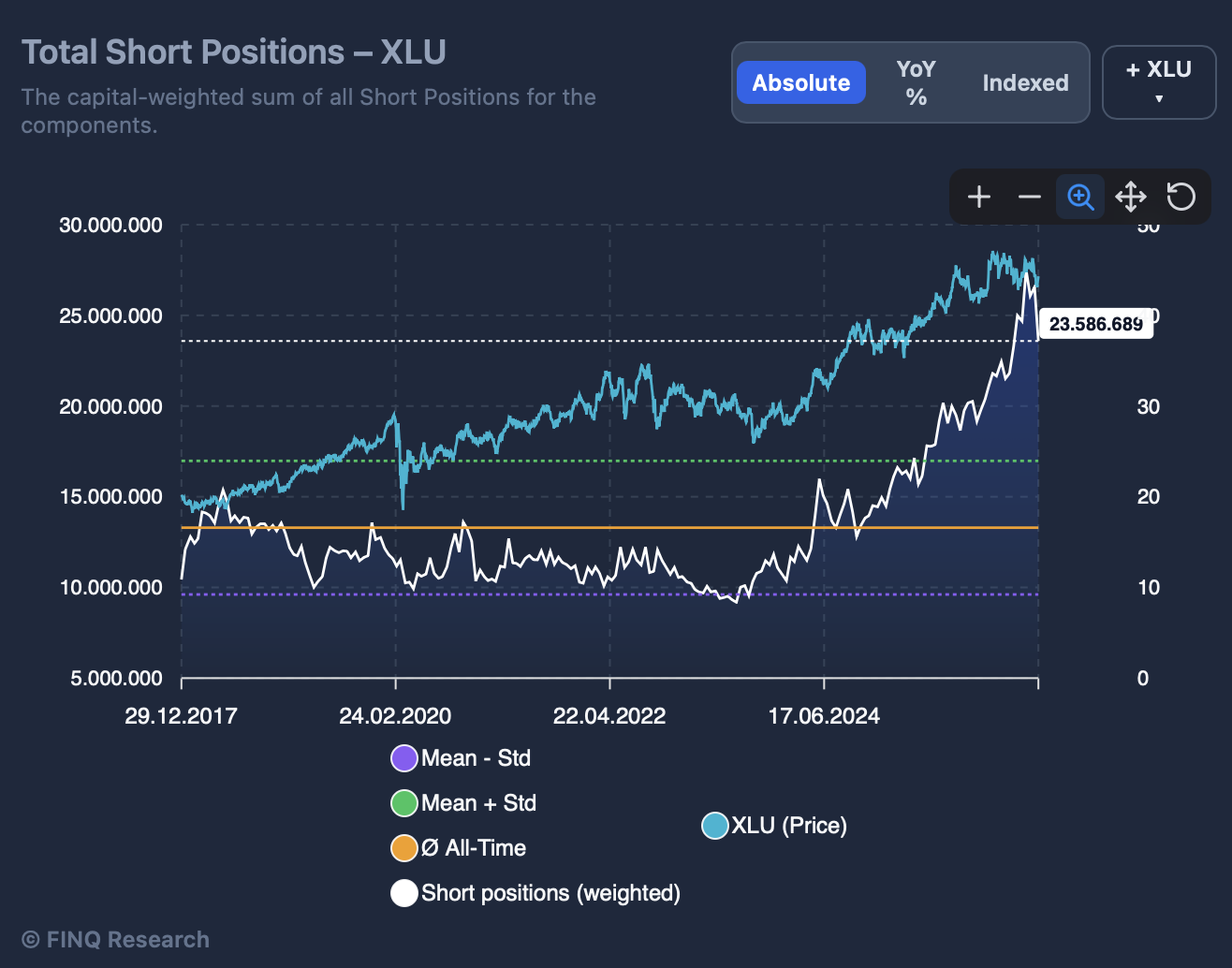
Capital-weighted short positions within the sector have increased significantly and currently stand at approximately 23.6 million. This puts them clearly above their long-term average and above the upper standard-deviation range shown in our analysis.
From a fundamental perspective, some of this skepticism is understandable. Rising financing costs, attractive bond yields, and uncertainty surrounding future capital costs provide investors with plenty of reasons to remain cautious on the sector. Nevertheless, increasing short positioning changes the asymmetry. The more extensively a negative narrative is already reflected in market positioning, the smaller the additional catalyst may need to be to trigger a counter-move.
If bond yields were simply to stabilize — they would not even need to fall substantially — while equity-market volatility increased at the same time, some of this positioning could be reassessed quickly.
At the same time, our market-breadth analysis shows that the current correction is by no means limited to only a handful of large companies.
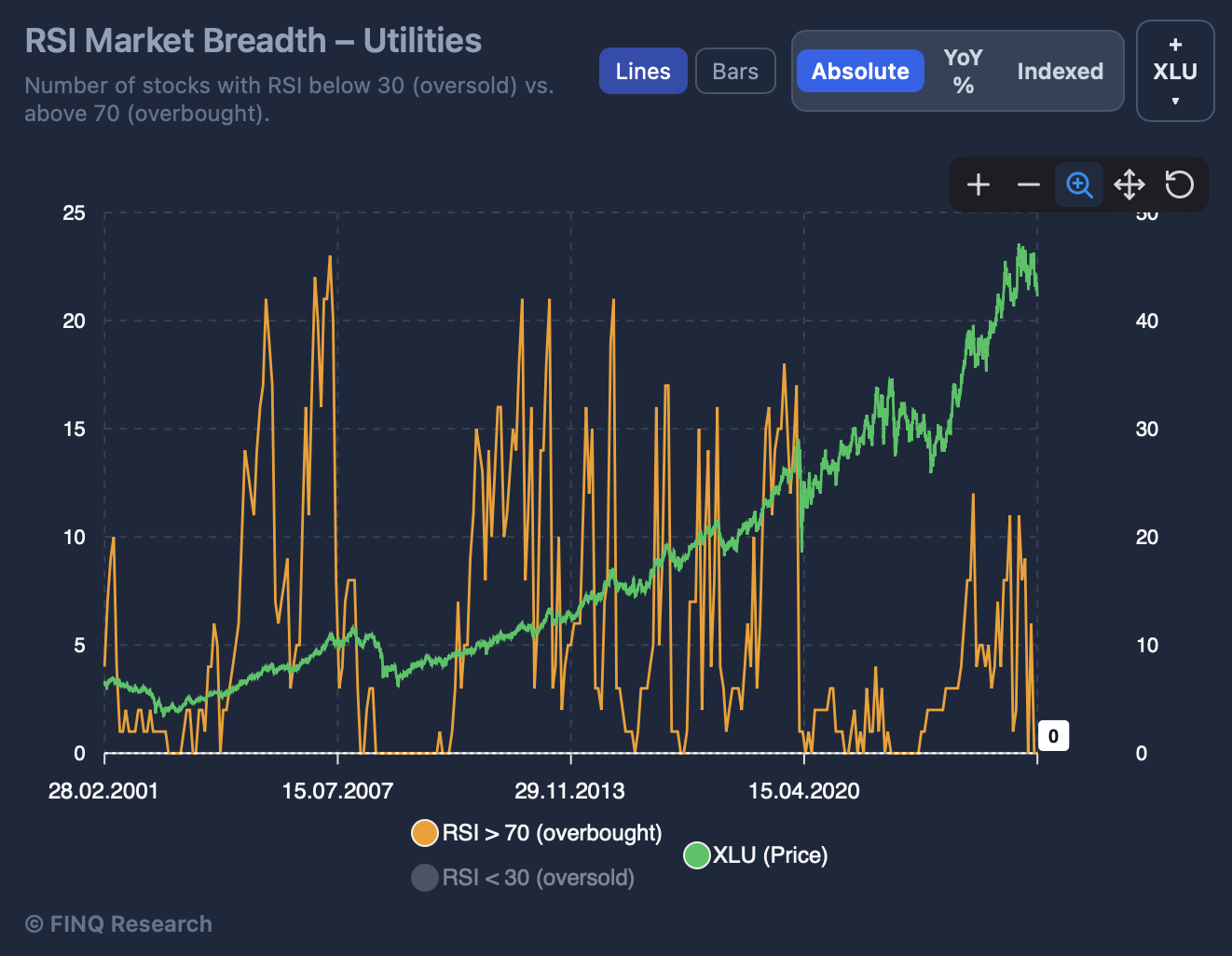
The number of overbought stocks on a monthly basis, measured by an RSI above 70, has recently fallen to almost zero. The previously broad momentum impulse has therefore been fully unwound.
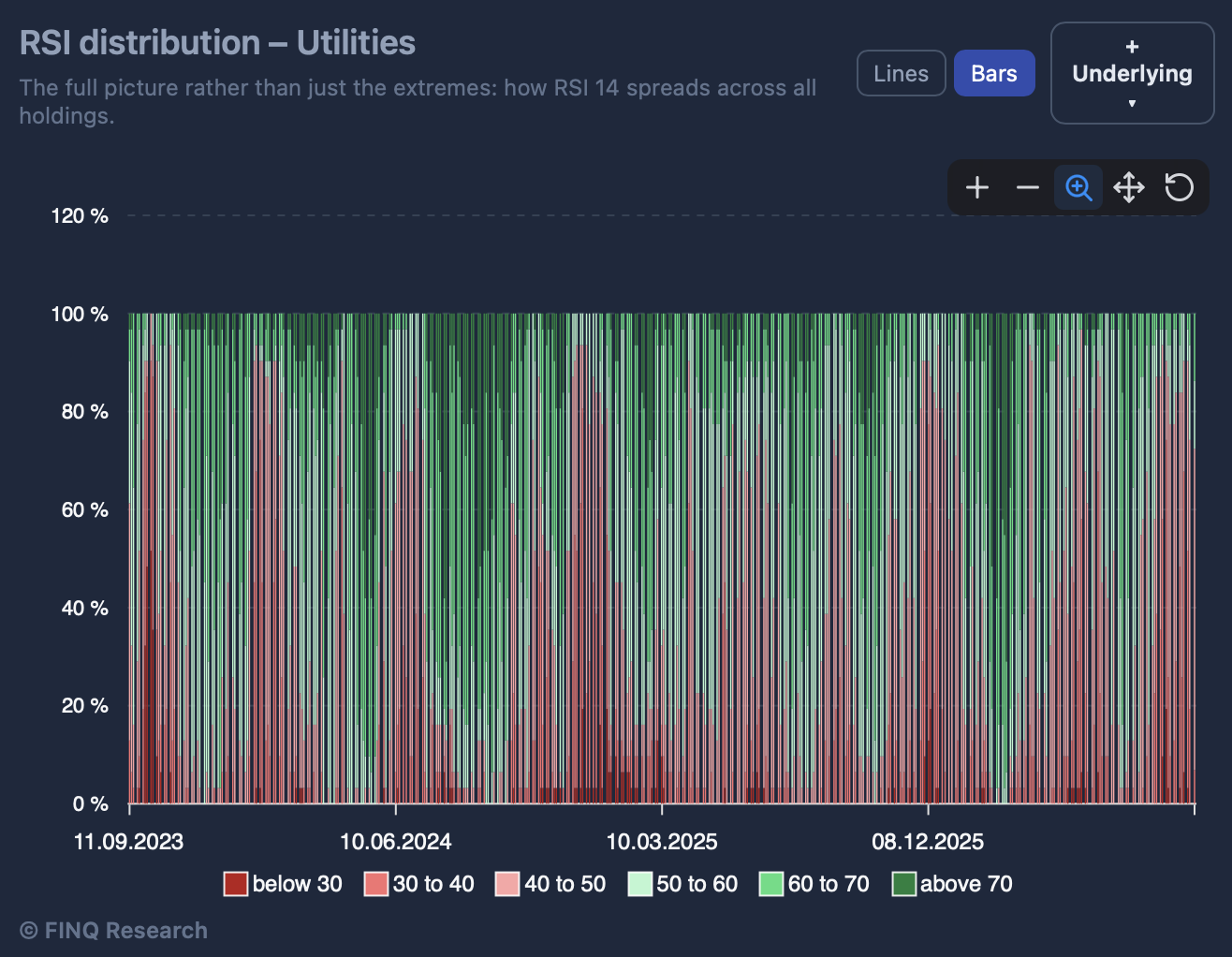
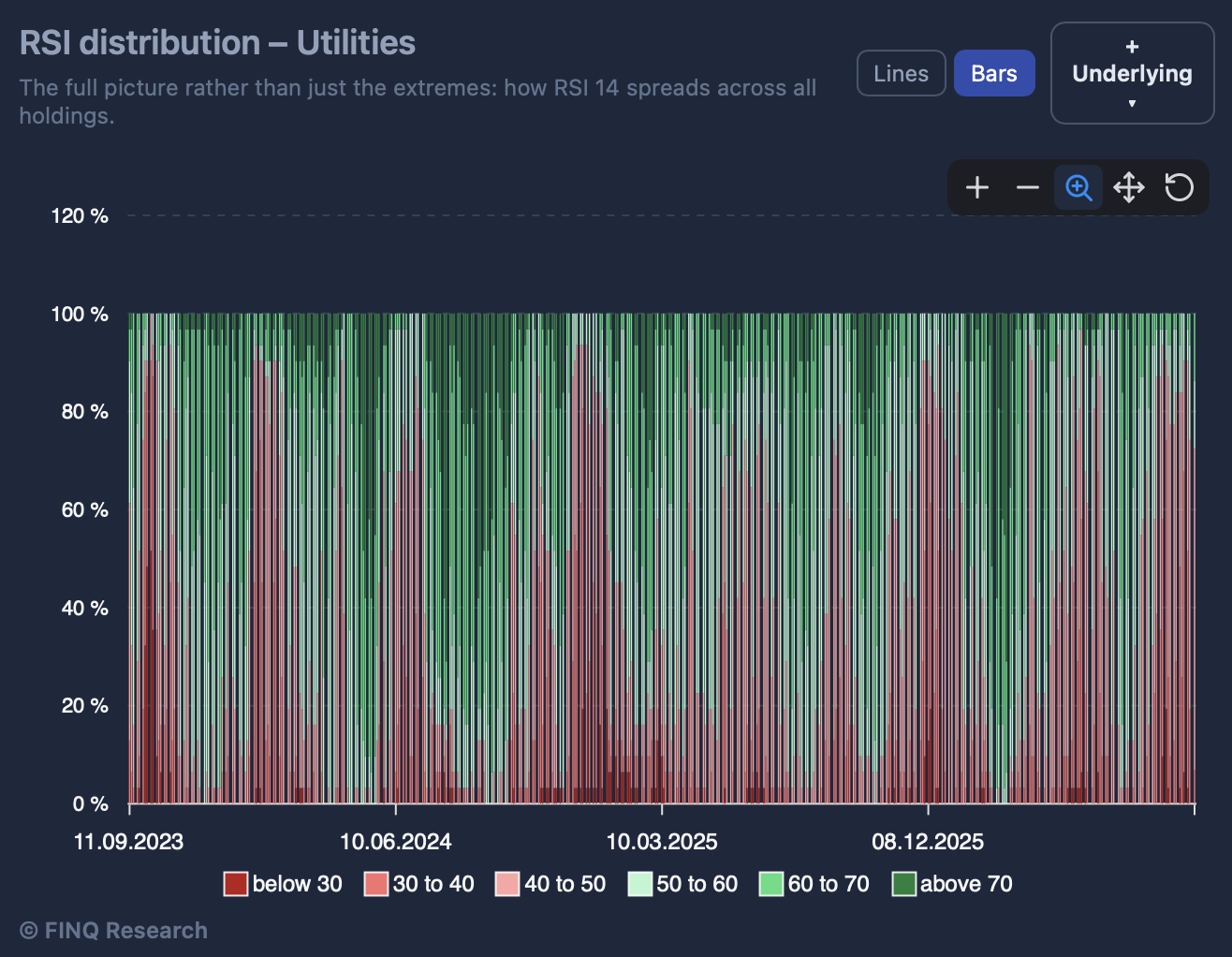
The full RSI distribution confirms this development. An increasing share of index constituents has moved out of the higher-momentum ranges and into neutral or weaker RSI zones. The sector is therefore not merely experiencing a correction at the index level — weakness has broadened internally.
The trend data makes this even clearer.
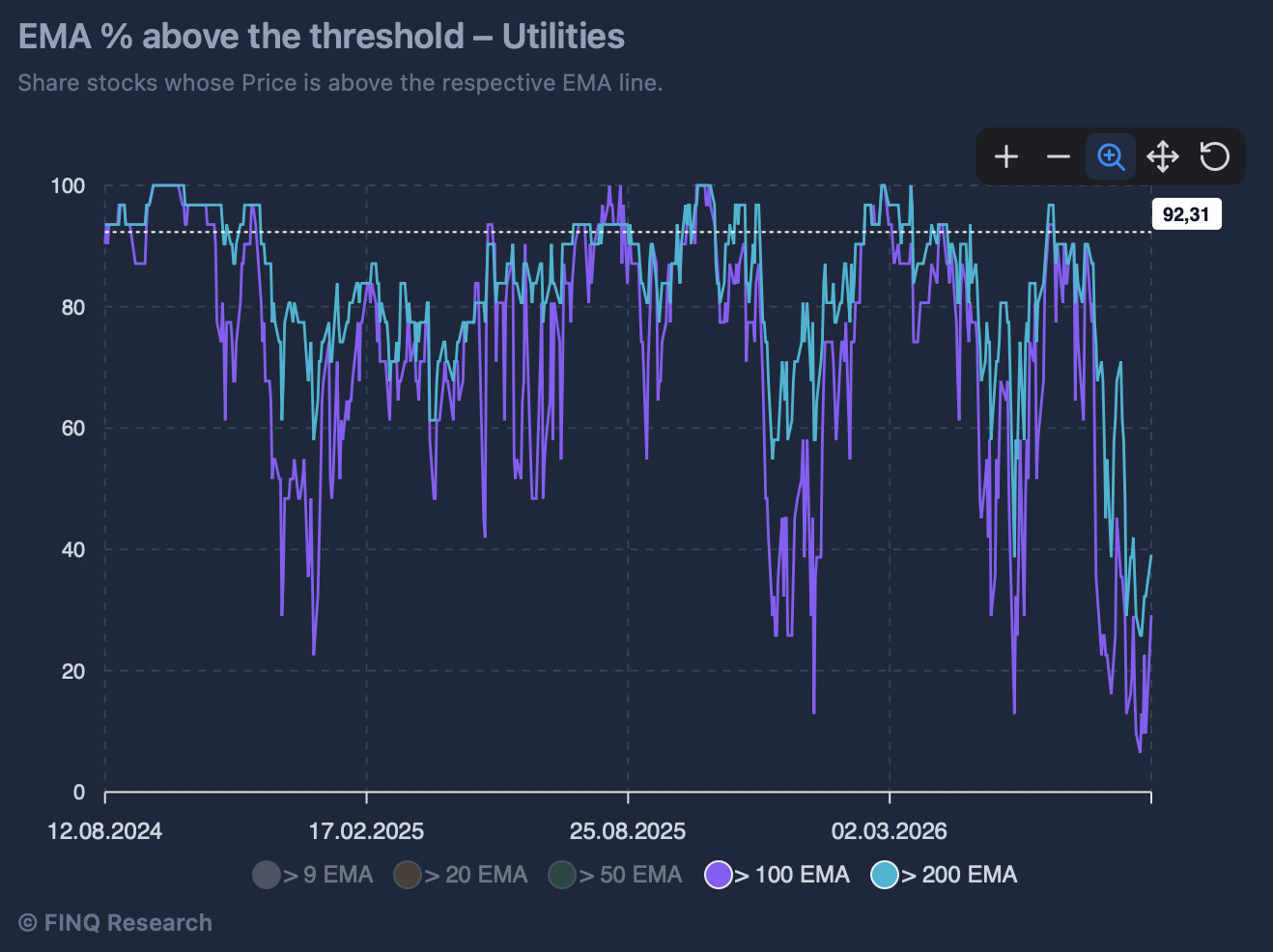
The percentage of stocks trading above important medium- and long-term moving averages has declined significantly from previous highs.
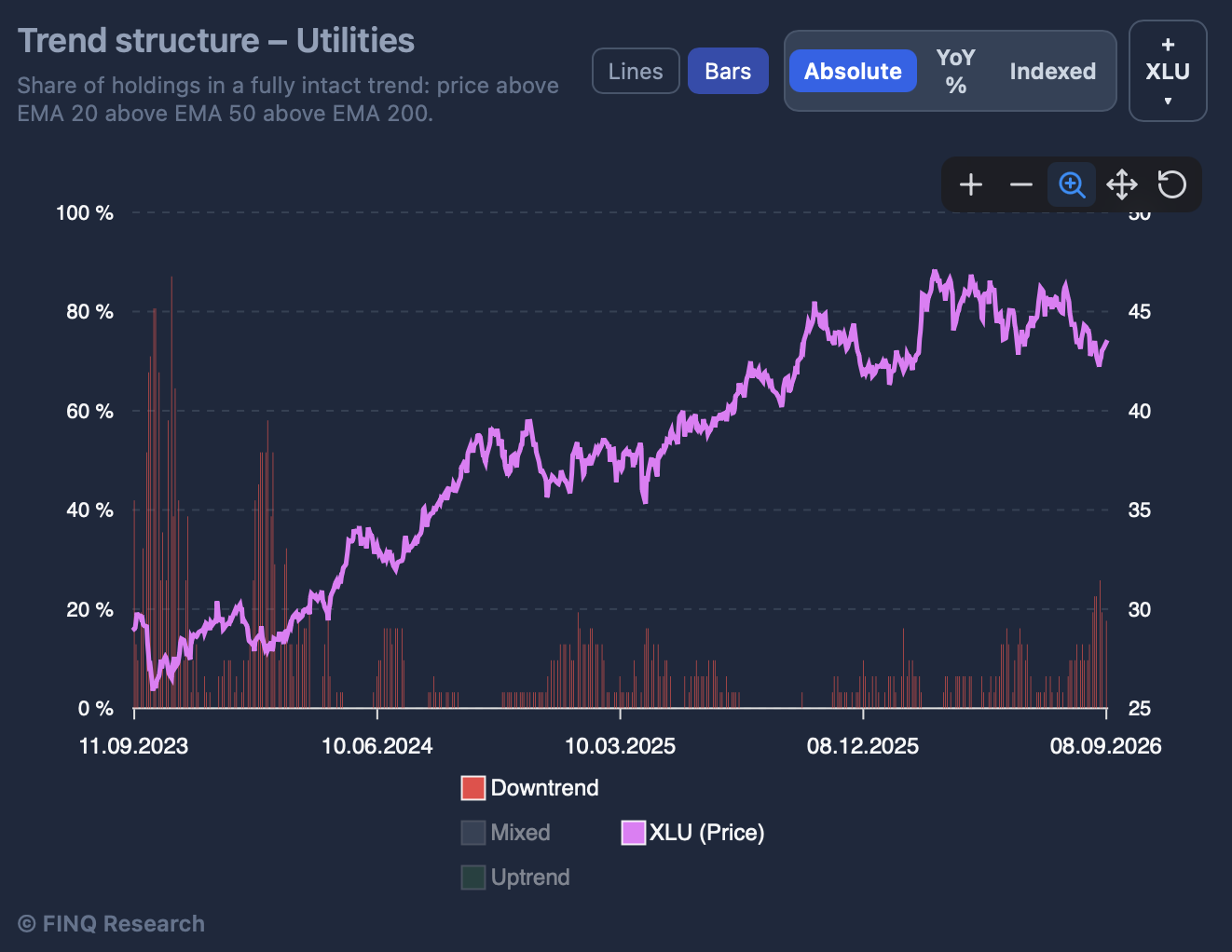
At the same time, the share of index constituents in fully intact uptrends has fallen, while more stocks have transitioned into downtrends. From a technical perspective, the sector has therefore not yet reached a point where we could speak of a confirmed new upward trend.
This is crucial to our thesis: we are not trying to follow an already confirmed trend. We are observing a sector whose internal structure is currently being reset.
The Long-Term Trend Is More Resilient Than Short-Term Momentum
Despite this weakness, there is a notable difference between short-term and longer-term market breadth.
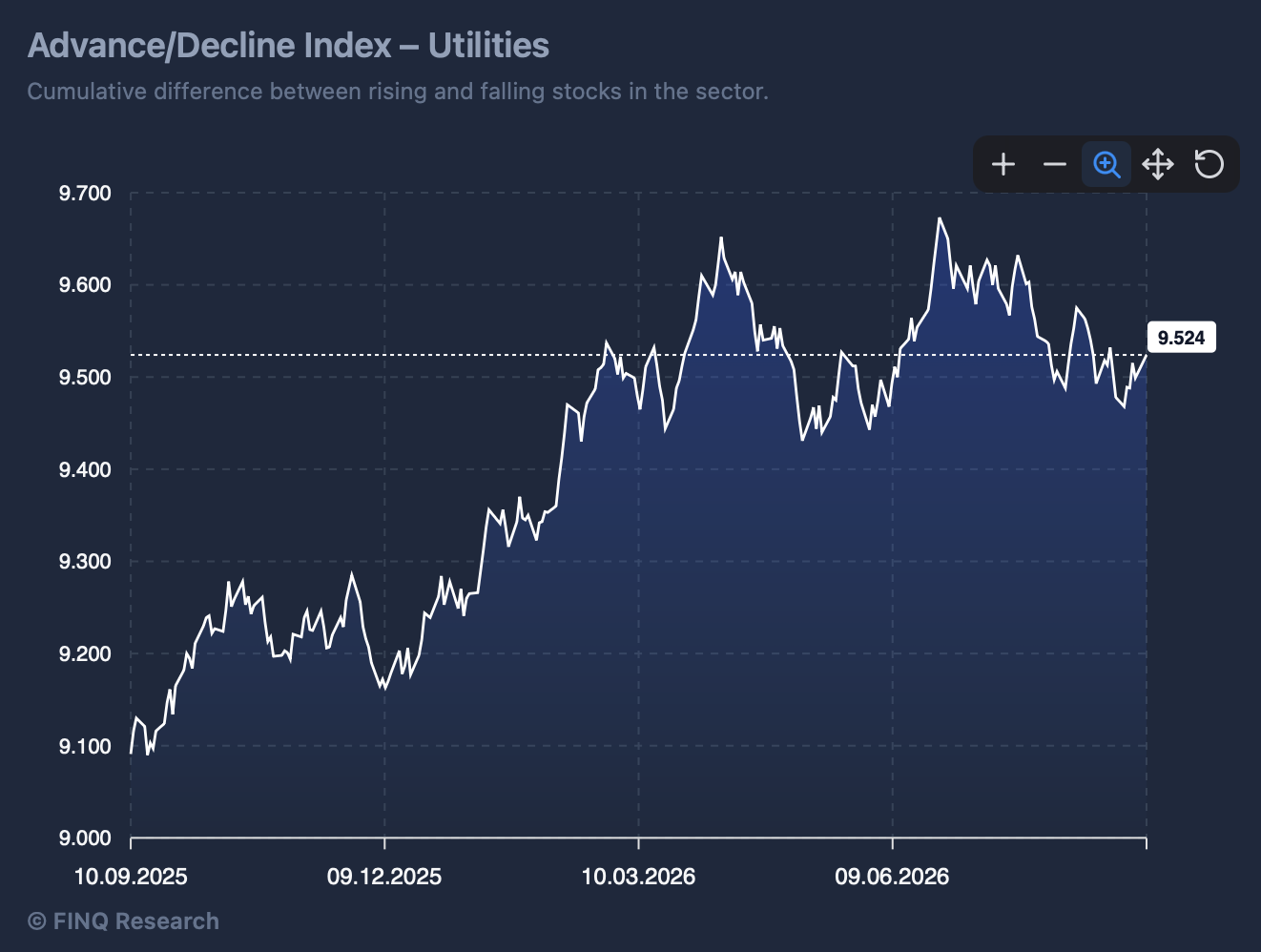
The cumulative Advance/Decline Index currently stands at around 9,524, which remains relatively close to the upper end of its one-year range. Recent weakness is clearly visible, but longer-term participation has so far not deteriorated to the same extent.
This creates a divergence: short-term momentum and trend breadth are deteriorating significantly, while the longer-term cumulative breadth structure remains considerably more resilient.
These are precisely the types of setups we find interesting. Either short-term weakness eventually pulls the longer-term structure lower as well — in which case the correction would be more structural than currently assumed — or the current move primarily represents a reset within an otherwise intact longer-term trend.
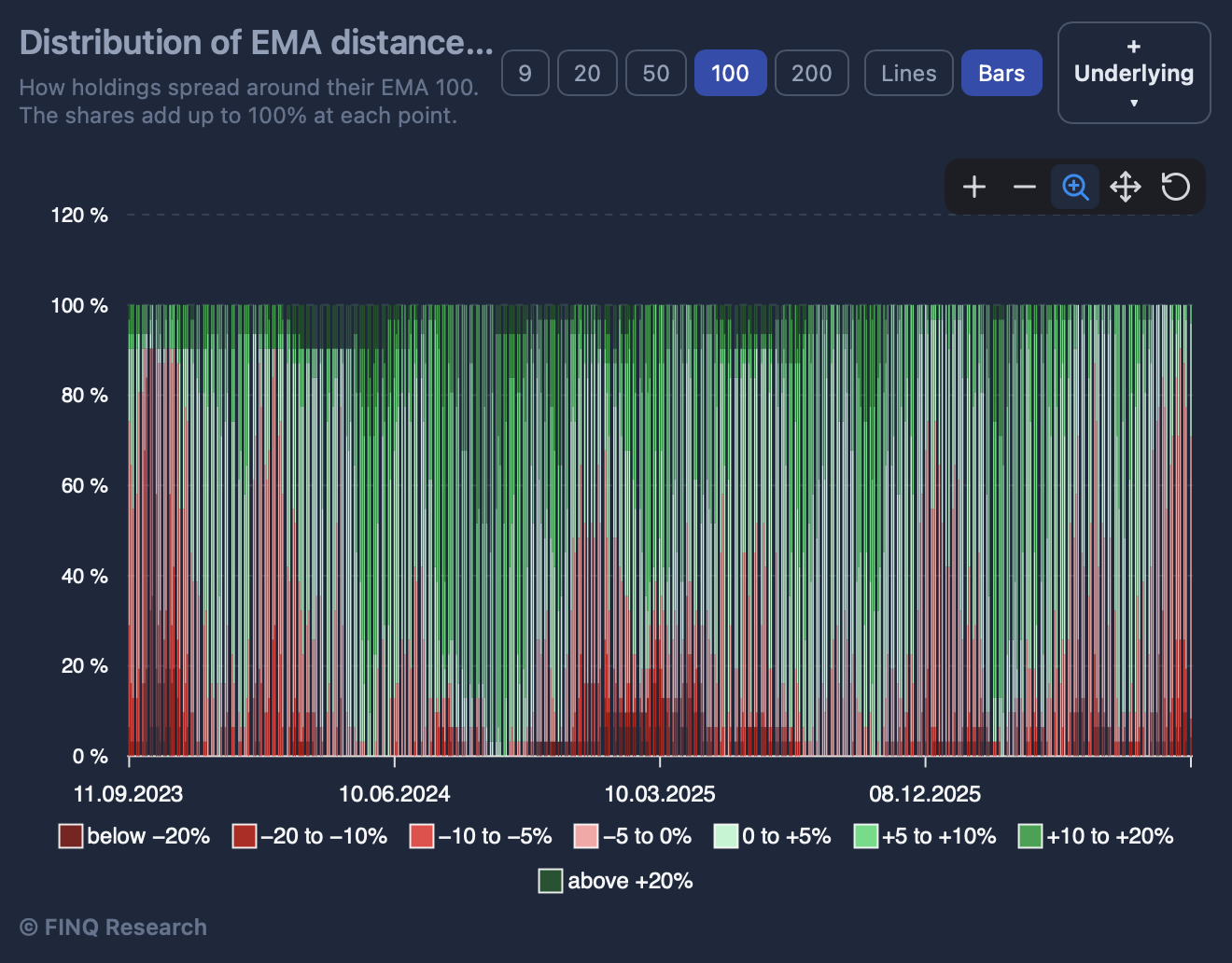
The distribution of distances from the 100-day EMA reinforces this reset. A large share of index constituents has now moved to the negative side of the medium-term trend structure. The previously broad optimism has therefore been significantly reduced.
The signal from 52-week lows on a monthly basis also shows no signs of widespread capitulation so far.
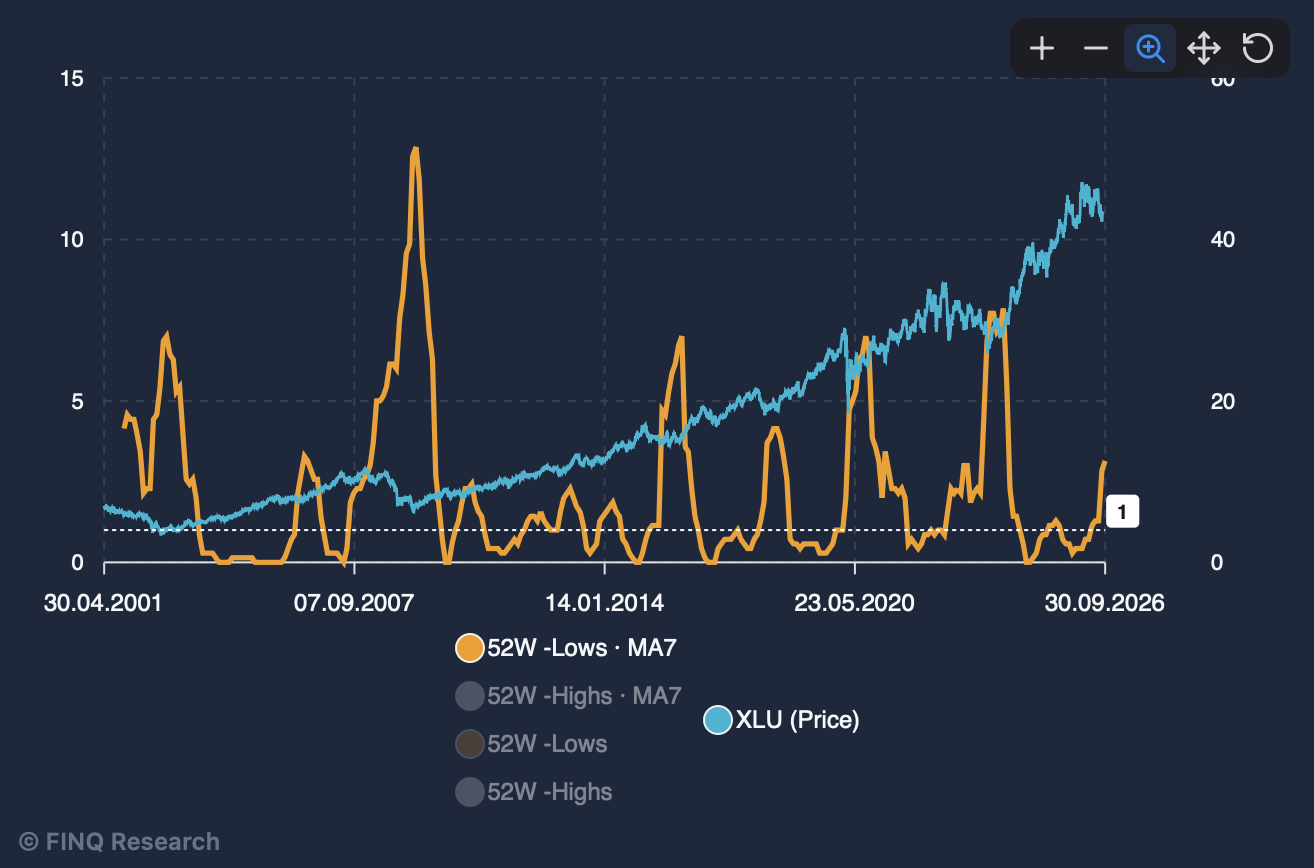
Despite the visible weakness in shorter-term indicators, we are therefore not yet seeing a wave of new long-term lows across the sector.
That is an important distinction between a normal correction and a structural breakdown of the longer-term trend.
No Longer Just a Sector Bet
XLU consists of 30 companies and is simultaneously relatively concentrated in its largest positions. NextEra Energy, for example, accounts for approximately 13% of the portfolio, followed by Southern Company, Duke Energy, and Constellation Energy.
These companies are often grouped under the same "utilities" label, yet their fundamental drivers differ considerably. Capital structures, regulatory environments, investment requirements, and particularly their exposure to and participation in rising electricity demand can vary substantially.
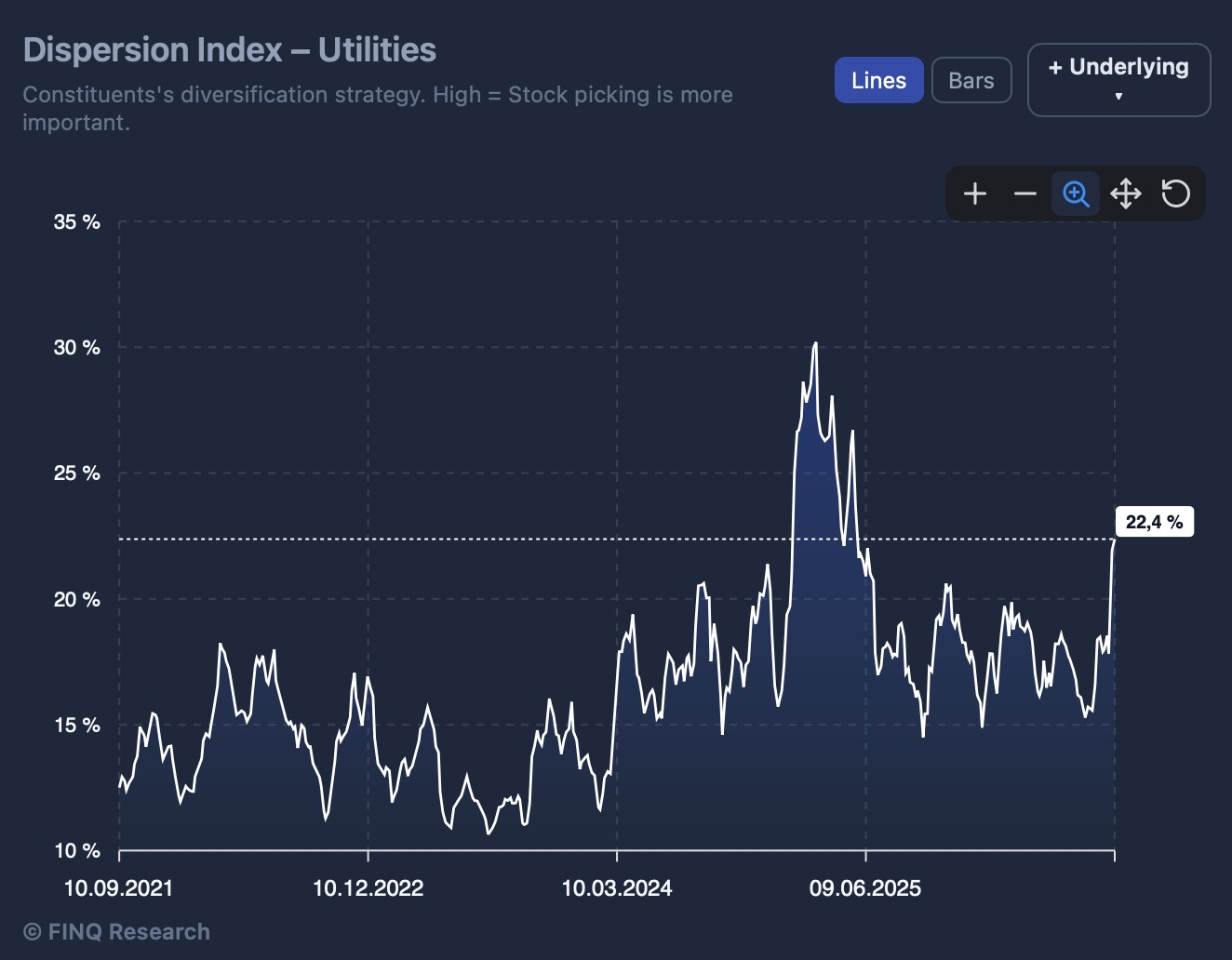
The market is increasingly beginning to reflect these differences. Our Dispersion Index has risen to approximately 22.4%, placing it well above many of the levels observed between 2021 and 2023. Performance differences between individual utilities are widening.
This is particularly relevant against the backdrop of potentially substantial future electricity demand. Data centers, AI infrastructure, reindustrialization, and electrification are changing the demand profiles of individual power markets. Not every utility will benefit equally — and not every company has the same balance-sheet strength to efficiently finance the investment required to meet that demand.
Rising dispersion therefore means that while the macroeconomic thesis may apply to the sector as a whole, actual returns are increasingly likely to be determined at the individual-company level.
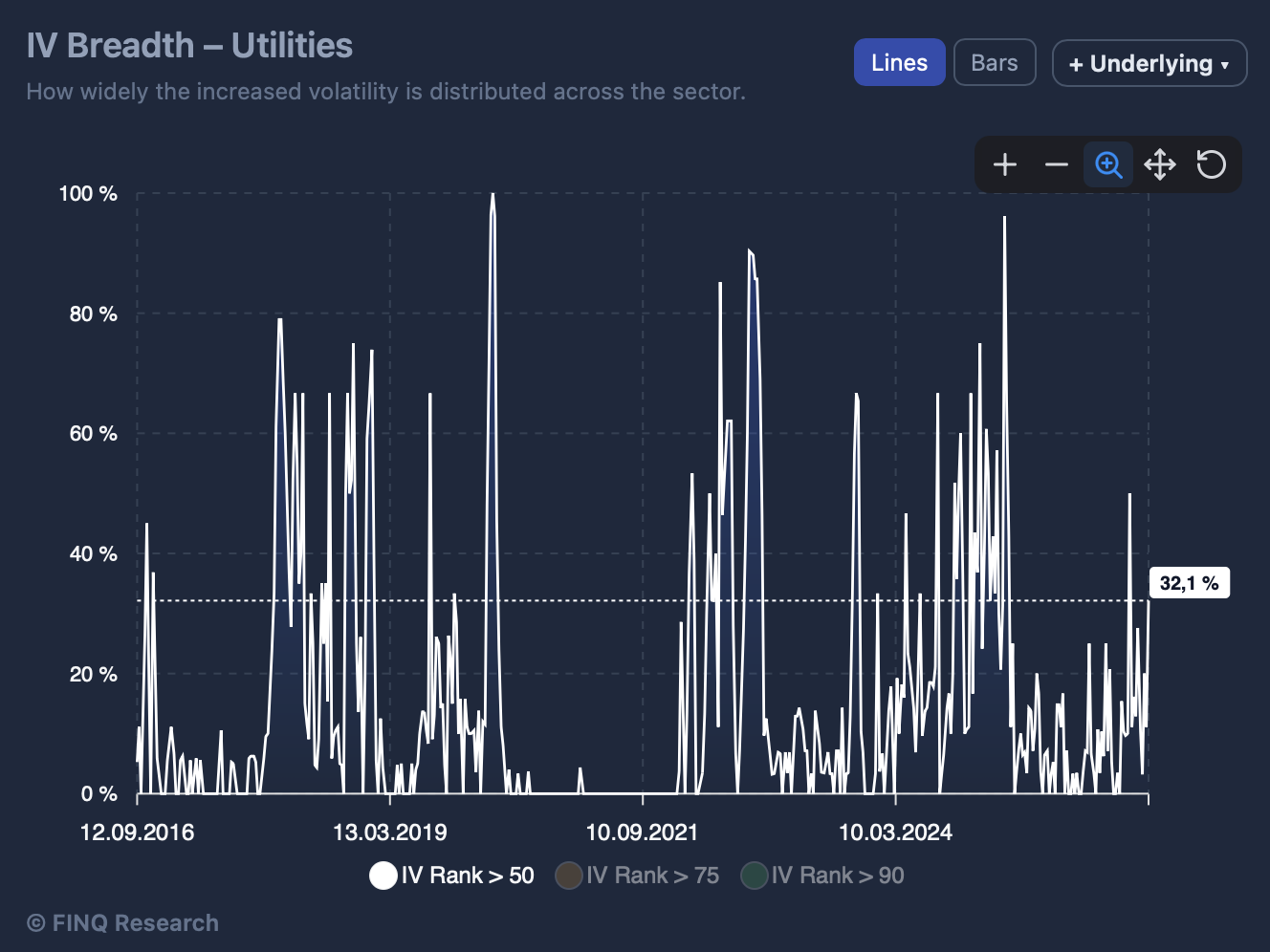
The volatility structure also points toward greater differentiation. Around 32% of index constituents currently have an IV Rank above 50. This is not yet a sector-wide stress event, but it shows that elevated uncertainty now affects a meaningful share of the universe.
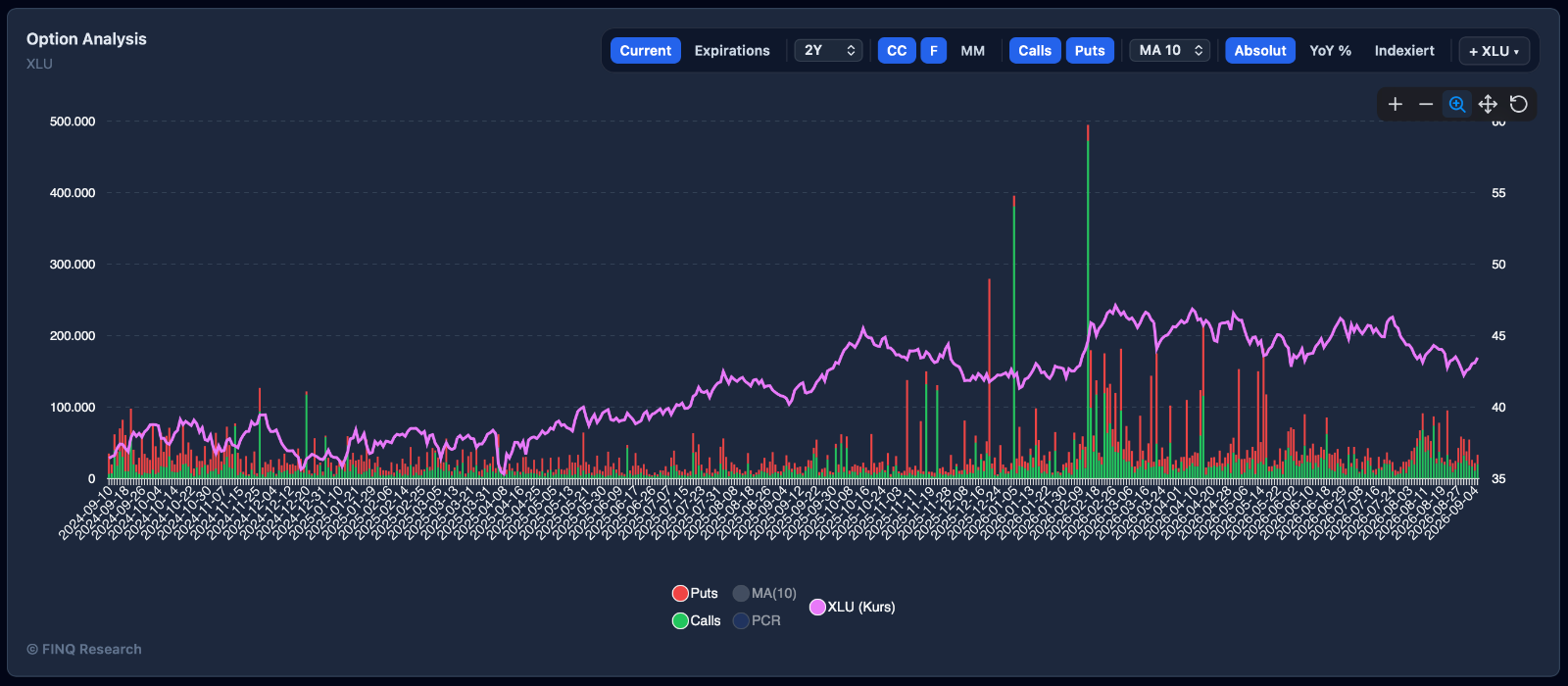
Activity in the options market fits this picture. Both call and put options are showing substantially higher activity compared with quieter periods, alongside recurring volume spikes. Investors are therefore visibly becoming more active in positioning around both risks and opportunities within the sector.
Why the Timing Is Becoming Interesting
This brings us to the core investment thesis.
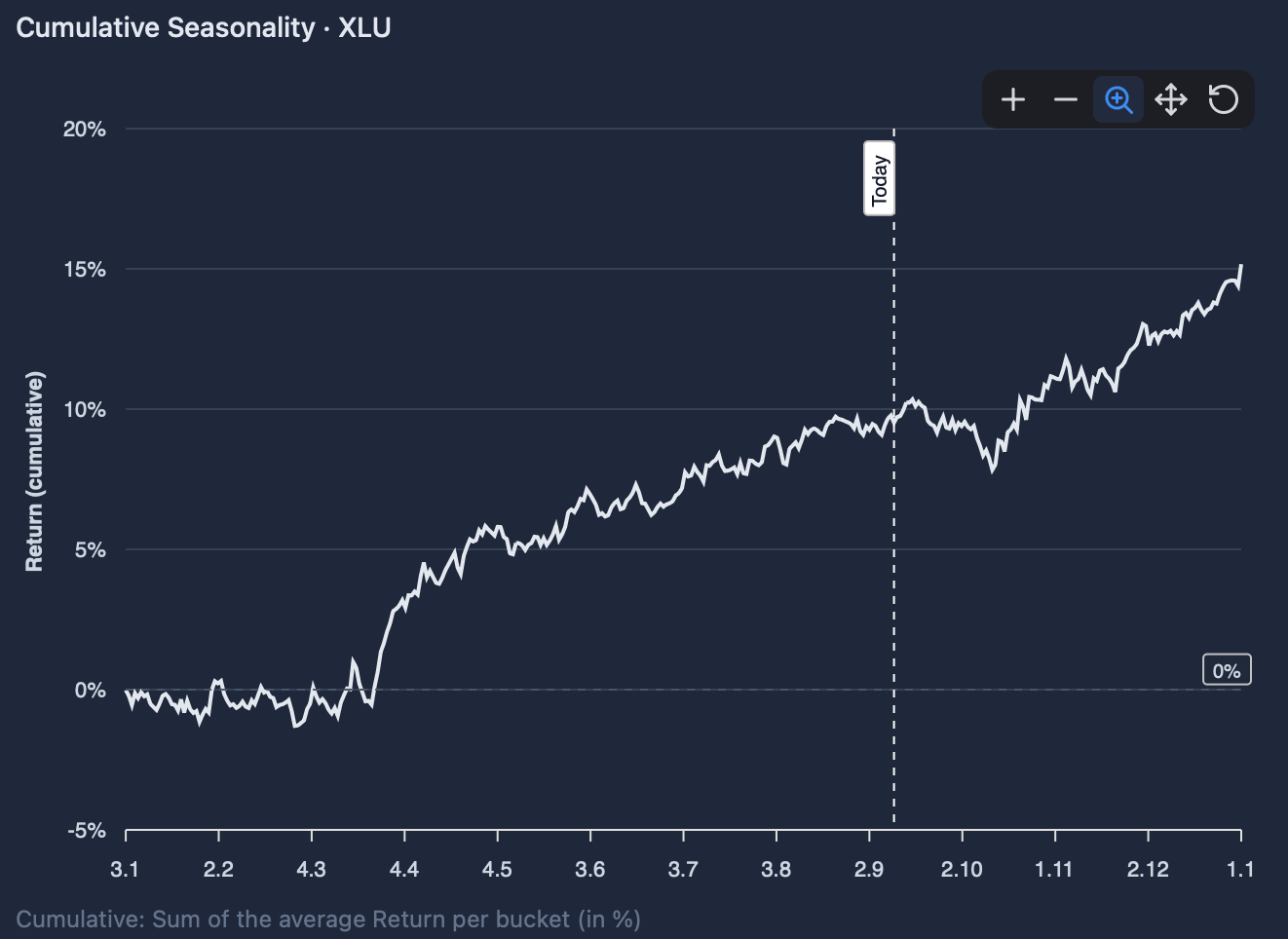
Historically, XLU's seasonal structure becomes more constructive as the year progresses. Our cumulative seasonality profile rises from the current area of roughly 10% toward approximately 15% by year-end. Seasonality alone carries limited significance for us. In combination with a reset in valuations, weaker momentum, and increasingly defensive positioning, however, it becomes more interesting.
The macroeconomic environment remains the key risk factor. A 10-year U.S. Treasury yield approaching 5%, oil prices above $100 per barrel, and renewed upward pressure on inflation expectations are not a classically positive environment for utilities. On the contrary: if the selloff in the bond market continues unchecked, valuation pressure on the sector is likely to persist.
That is precisely why we do not view the current situation as a simple "buy utilities" trade.
We see it as a potential early shift in relative capital allocation.
In a strong market characterized by high risk appetite, utilities currently face two major competitors: growth stocks offer greater upside potential, while government bonds offer yields approaching 5%. In a weaker equity market, however, that equation changes. Stable cash flows, lower earnings cyclicality, and dividends suddenly become more valuable.
And this is precisely where the next sector rotation could emerge.
Utilities do not need a return to zero interest rates for this to happen. They probably do not even require aggressive rate cuts. A stabilization in long-term yields combined with rising uncertainty in the equity market could already materially change the relative equation.
This is what makes the current setup so interesting: the sector continues to compete against one of the strongest fixed-income alternatives investors have seen in years. At the same time, it is now trading below its longer-term valuation averages, short positioning is elevated, short-term momentum has been substantially reset, and correlation with the broader equity market has effectively disappeared.
The macroeconomic headwind is still there.
But prices are increasingly beginning to compensate investors for it.
And that is precisely why utilities could become interesting again in a weaker overall market: not because the fight for capital is over, but because the relationship between valuation, yield, and defensive quality may slowly be shifting back in favor of the sector.
Disclaimer
This publication is provided solely for informational and analytical purposes and does not constitute investment advice, an offer, solicitation, or recommendation to buy or sell securities, financial instruments, or any other assets.
The views, analyses, and market expectations presented are based on information available at the time of publication and may change at any time. Historical developments, statistical relationships, seasonal patterns, and past performance are not reliable indicators of future results.
All data and information used in this publication are obtained from sources we consider reliable. However, no guarantee can be given as to their completeness, accuracy, or timeliness. Investing in financial markets involves risk and may result in the partial or total loss of invested capital.
Readers should make investment decisions based on their individual financial circumstances, investment objectives, and risk tolerance and should seek independent professional advice where appropriate.